The photo-eyes, first and almost always
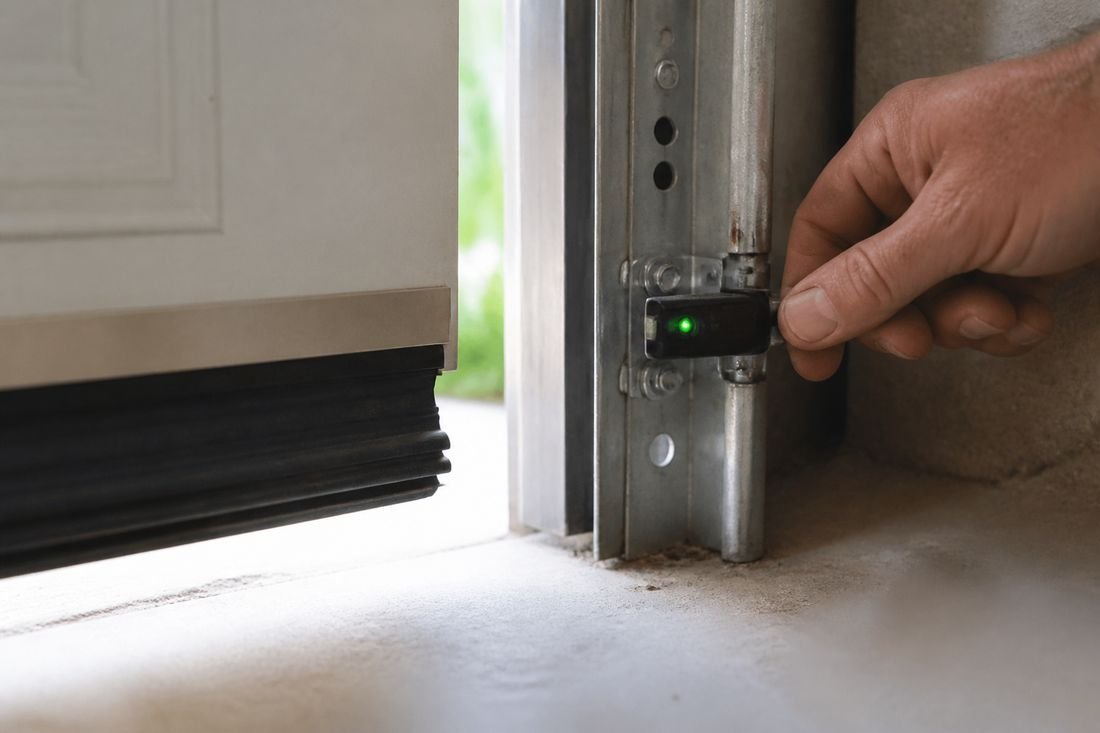
Since 1993 every residential opener sold in the United States has had a pair of photoelectric sensors mounted about six inches off the floor either side of the opening. If the beam between them is broken or misaligned, the opener refuses to close. It is the single most common cause of a door that will not close, and it is usually free to fix.
Look at the LEDs on both sensors. On most brands, one steady light on each means aligned; a blinking or dark LED means misaligned or obstructed. Wipe both lenses — cobwebs, road salt spray and dust genuinely cause this. Then check the brackets, because sensors get knocked by bikes, trash cans and snow shovels constantly. Loosen the wing nut, adjust until both LEDs are steady, tighten.
Something in the path
Obvious, but worth saying: the sensors detect anything crossing the beam, including a garden hose coiled slightly too close, a bag of salt, a low-hanging cord, or in winter a drift of snow that has blown under the door. Sweep the threshold and look along the beam line at floor level rather than at eye level.
Close-force and down-limit settings
If the sensors are fine, the next candidates are the opener's adjustments. The down-limit tells the opener where the floor is; if it is set too low the opener drives the door into the ground, senses resistance and reverses. The close-force sets how much resistance is allowed before it decides something is in the way.
Both are adjustable, both are on the motor head, and both should be adjusted by small increments. A word of warning: cranking the force up to make a door close is how people mask a mechanical problem, and it defeats the safety system that stops the door crushing something. If the door needs more force than it did last year, something is binding and the force setting is the wrong thing to change.
Track obstruction or a bad roller
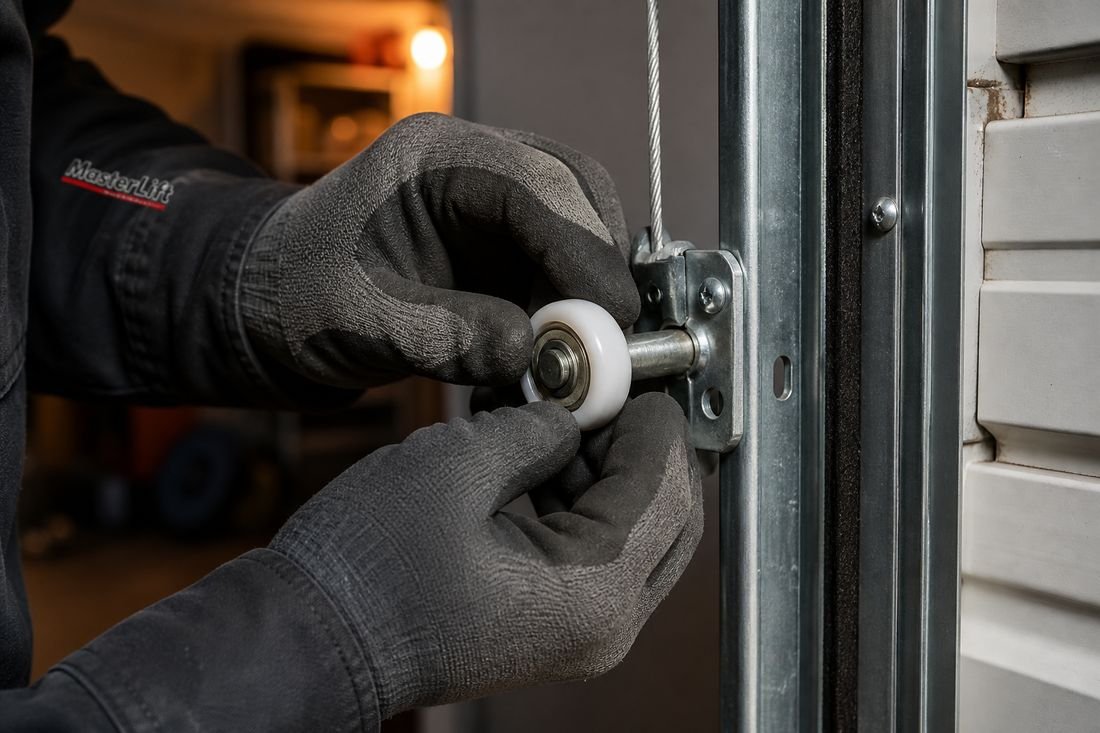
If the door closes partway and reverses at the same point each time, look at that point in the track. A dented track section, a hinge that has cracked, or a roller with a failed bearing will bind at a specific height. Run your eye down both vertical tracks and look for a bright rubbed patch or a visible dent.
Track alignment and door balance
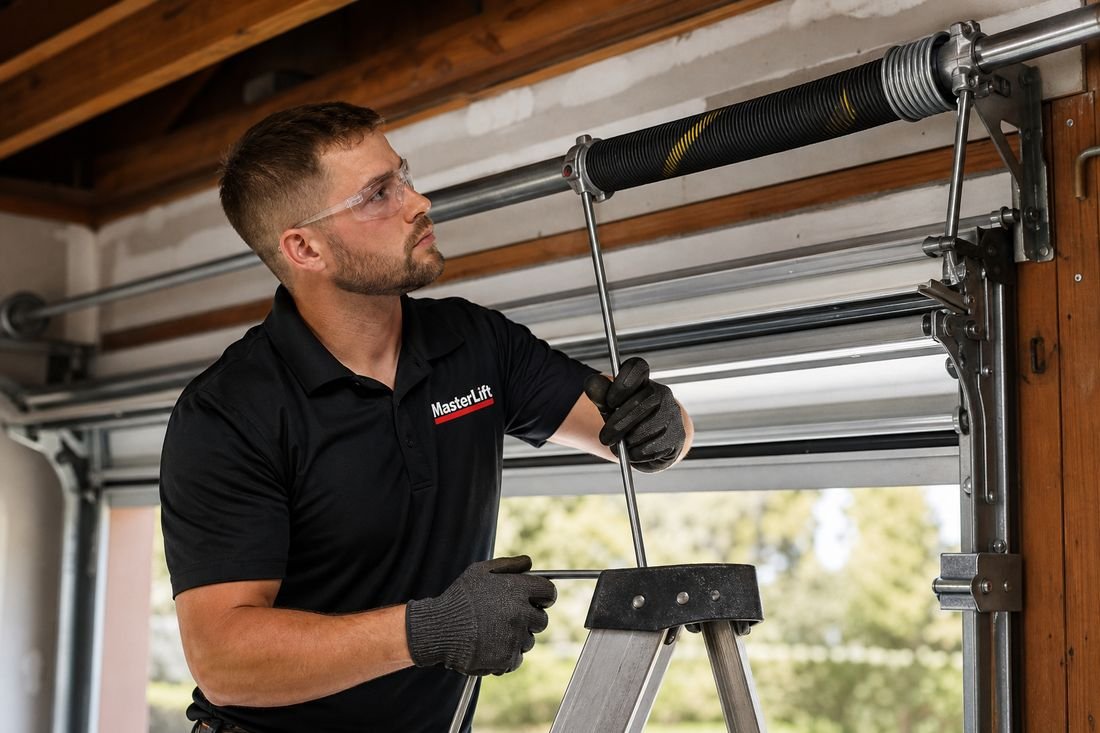
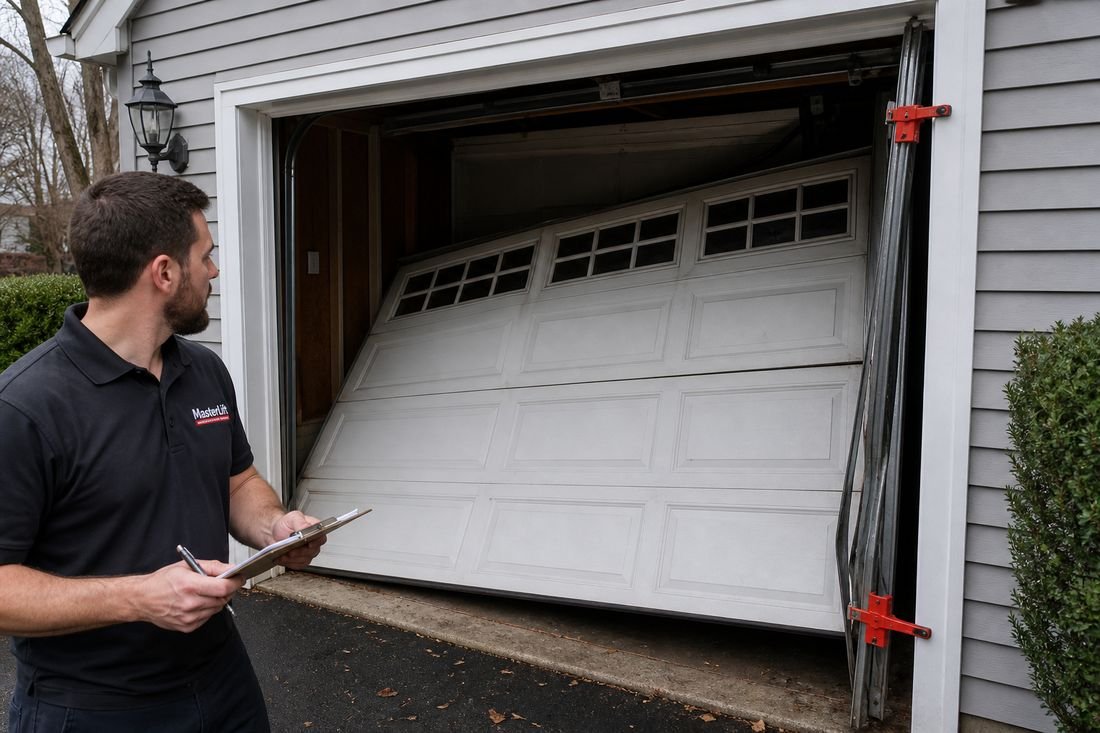
Pull the release cord and move the door by hand. It should glide, and it should hold position when you let go at waist height. If it drifts down fast, the springs are weak. If it fights you, the tracks are out of alignment or a roller is seized. Either way the opener is being asked to do something the door is resisting, and it is correctly refusing.
Remote and wiring faults
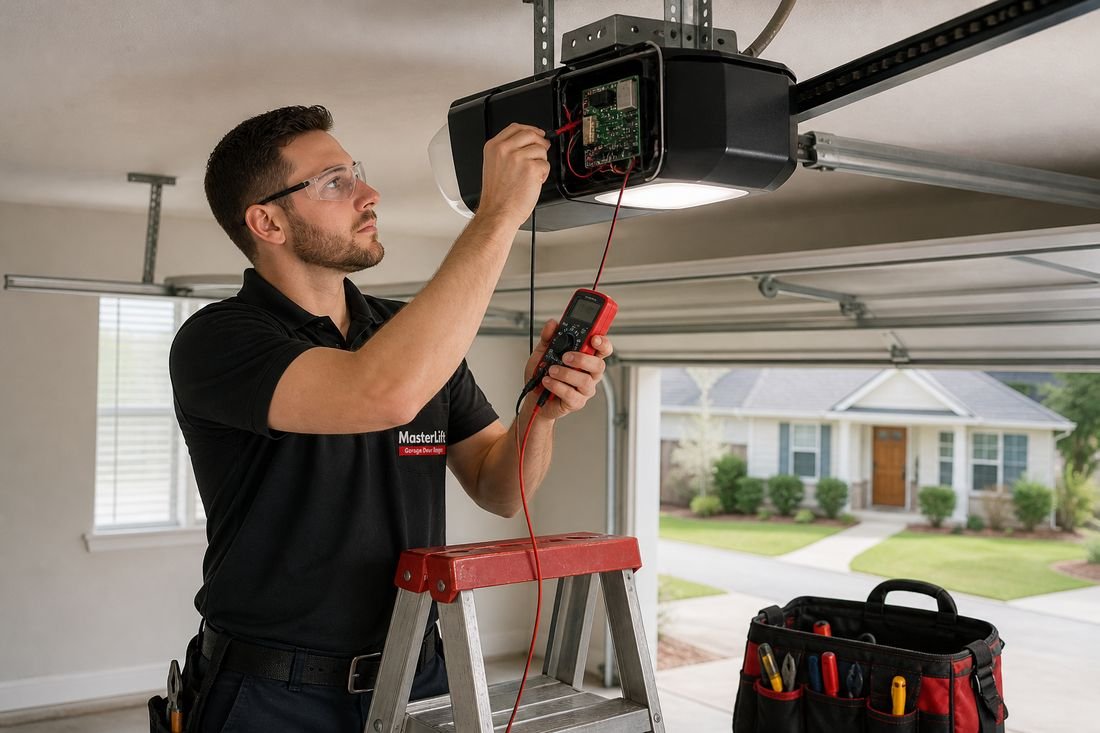
Less common, but a shorted or pinched sensor wire produces the same symptom as a misaligned sensor, and staples driven through the wire during a past installation are a classic cause. If the sensors look perfect and the LEDs still misbehave, we trace the run.
What not to do
Do not bypass, tape over, or twist the sensor wires together to defeat the safety system. We find this on maybe one job in thirty and it is genuinely dangerous, particularly in a house with small children or pets. The system exists because doors used to kill people. If the sensors are faulty, replace them — a pair fitted is $95 to $170.
Do not hold the wall button down to force the door closed as a permanent workaround. Constant-pressure closing is a deliberate override for emergencies, not a way to live with a broken safety system.