Spring replacement pricing, straight up
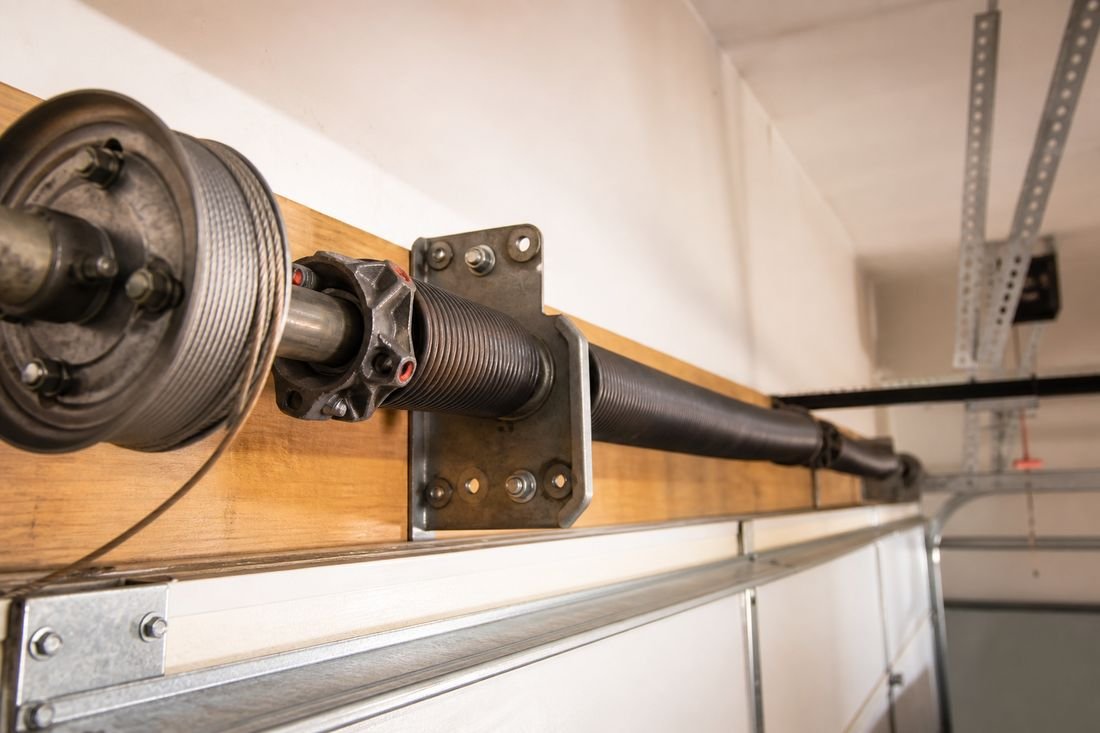
A residential torsion spring replacement in Connecticut runs $189 to $290 for a single spring and $260 to $420 for a matched pair. That is parts, labor, rebalancing and the safety test. High-cycle springs add roughly thirty to fifty dollars per spring and are almost always the better buy.
Extension springs — the ones that run along the horizontal tracks rather than on a shaft above the door — are cheaper at $170 to $280 for a pair, but if yours do not have safety cables threaded through them we will quote adding those, because an extension spring without a containment cable becomes a projectile when it fails.
Spring pricing table
| Job | Typical range | What moves the number |
|---|---|---|
| Single torsion spring, standard cycle | $189 - $290 | Wire gauge and length, door weight |
| Pair of torsion springs, standard | $260 - $420 | Double-wide doors, insulated door weight |
| Pair of torsion springs, high-cycle | $320 - $520 | 25,000 or 50,000 cycle rating, wire gauge |
| Extension spring pair | $170 - $280 | Adding safety cables, pulley condition |
| Springs plus cables and drums | $390 - $640 | Common when a spring failure chewed the drums |
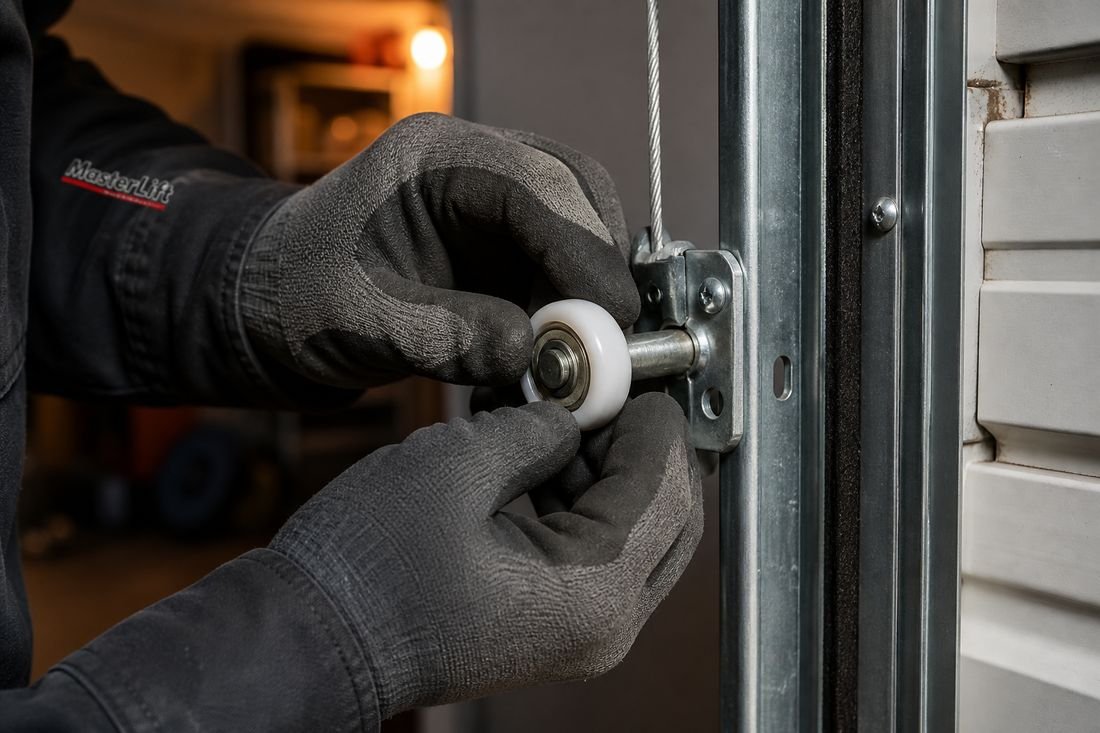
| Springs plus full roller set | $310 - $560 | Sealed-bearing nylon rollers, door height |
| Torsion conversion from extension | $450 - $780 | New shaft, drums, bearing plates, header work |
| Commercial high-cycle springs | $420 - $1,100 | Door weight, cycle rating, duty cycle required |
All figures include rebalancing and a full safety test. After-hours premiums are quoted on the phone before we dispatch.
Why both springs get replaced together
This is the line item people push back on most, so here is the reasoning without the sales gloss. On a two-spring door, both springs were installed on the same day and have lifted the door exactly the same number of times. Steel fatigues predictably. When one reaches the end of its cycle life, the other is typically weeks or a few months behind it, not years.
Replacing one costs you a spring now and a full second call-out shortly afterwards. Replacing the pair costs marginally more today and removes the second visit entirely. There is also a balance argument: a new spring paired with a fatigued one applies uneven lift, which loads the cables and drums unevenly and shortens their life too.
If you genuinely want just the broken one replaced, we will do it and note the reason on the invoice. We would just rather you knew what you were choosing.
Cycle ratings and what they buy you
A cycle is one open plus one close. The standard spring most builders specify is rated at ten thousand cycles. If your household opens the door four times a day, that is roughly seven years. Six times a day and you are down to about four and a half.
High-cycle springs are wound from heavier wire on a larger diameter and carry ratings of twenty-five thousand or fifty thousand cycles. The premium is small — typically thirty to fifty dollars a spring — and the lifespan multiplies. On any door serving a primary entrance, which in most Connecticut homes the garage is, high-cycle springs are simply the cheaper option measured over a decade.
How to tell your spring has gone
The obvious sign is a visible gap of two or three inches in the coil above the door, or an extension spring lying slack. The audible sign is a single loud bang, often mistaken for something falling over in the garage, sometimes reported by neighbors before the homeowner notices.
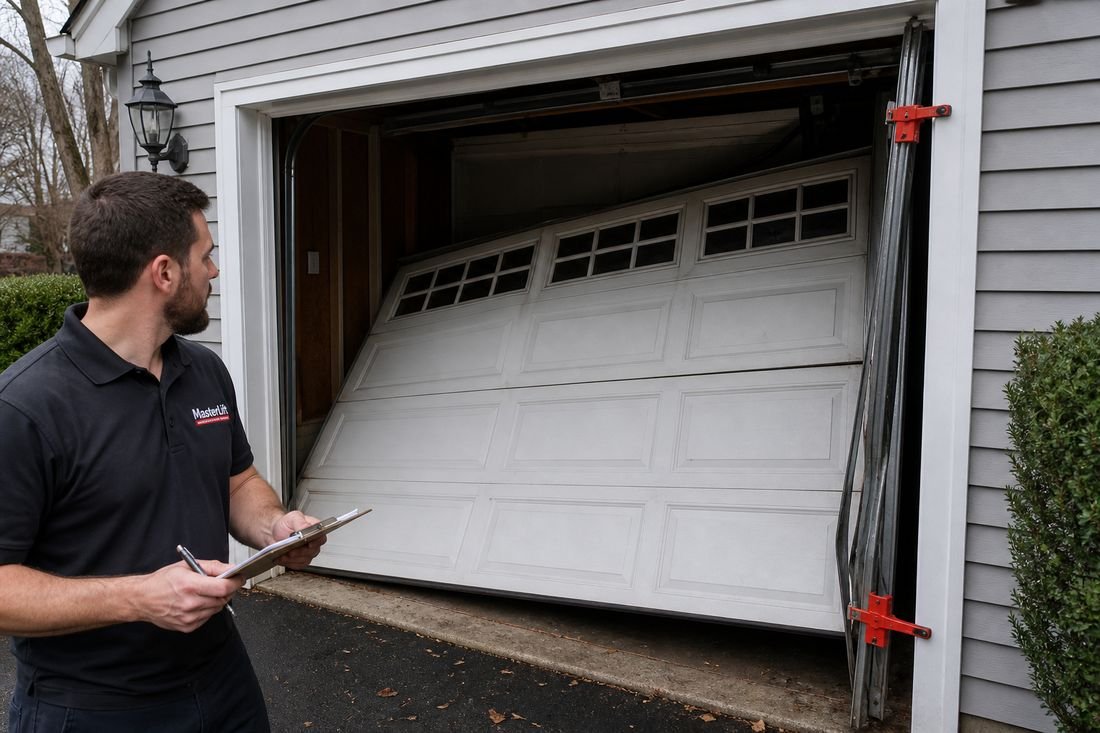
The behavioral signs come first. The door starts feeling heavy if you lift it manually. The opener strains, slows, or stops partway. The door drops fast in the last foot instead of settling. Or you notice it sitting crooked in the opening. Any of those means the spring system is out of balance and something is about to fail.
Please do not do this one yourself
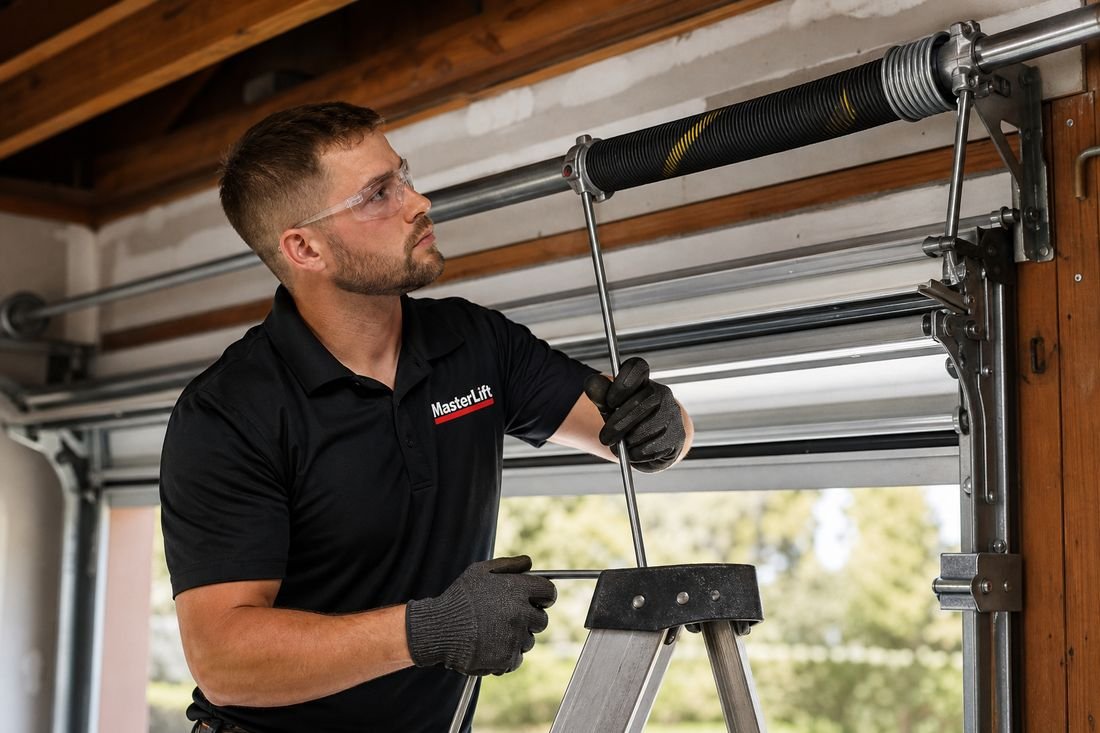
We say this on every page that touches springs and we will keep saying it. A wound residential torsion spring stores enough energy to break bones and remove fingers. The winding bars must be the correct diameter and length for the cone, the cone must be set at the right position on the shaft, and the shaft must be supported while tension comes off. Screwdrivers and rebar are not winding bars, and every year emergency rooms in this state see people who thought otherwise.
The parts are available online for less than we charge. The difference between our price and that price is a technician who has done it several thousand times and carries insurance for the day it goes wrong.