First: stop using the opener
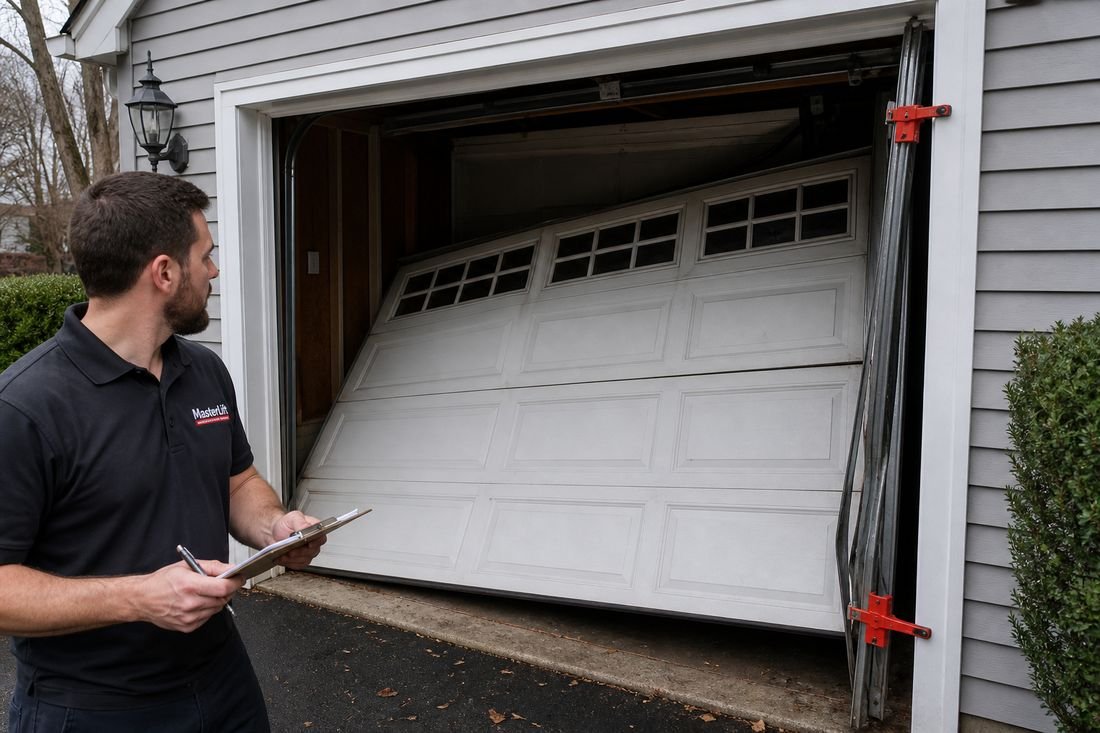
A door that has come off its track is holding two to three hundred pounds in a position nothing in the assembly was designed for. Every press of the button bends more track, damages more rollers and increases the chance of the door coming down or a panel folding. Pull the red release cord, keep people and vehicles away from underneath, and call.
If a vehicle is under or behind the door, do not try to drive it out. A door in this state can drop without warning and it will land on whatever is beneath it.
How doors come off track
Impact. Most commonly a vehicle. Even a slow reverse into the bottom section can pop rollers out on one side and bow the vertical track.
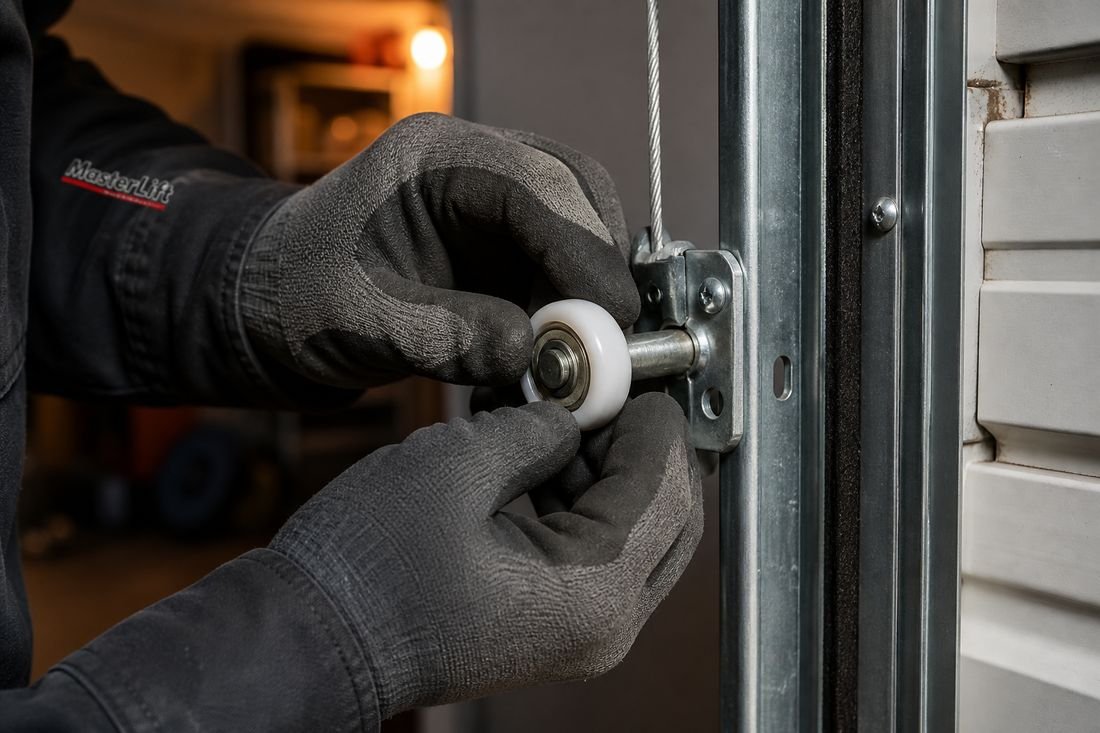
A seized roller. When a bearing fails, the roller stops rolling and starts dragging. Under load it eventually climbs and jumps the track lip, usually at the curve where the vertical meets the horizontal.
A cable failure. If a cable snaps or unwraps from its drum, that side of the door drops instantly while the other side stays up. The door racks diagonally and the rollers on the dropped side come straight out.
Loose or misaligned track. Lag bolts back out over years, the track drifts, and the gap between track and roller opens up until a roller escapes. This one gives you months of warning in the form of rattling if you know to listen for it.
What a proper repair involves
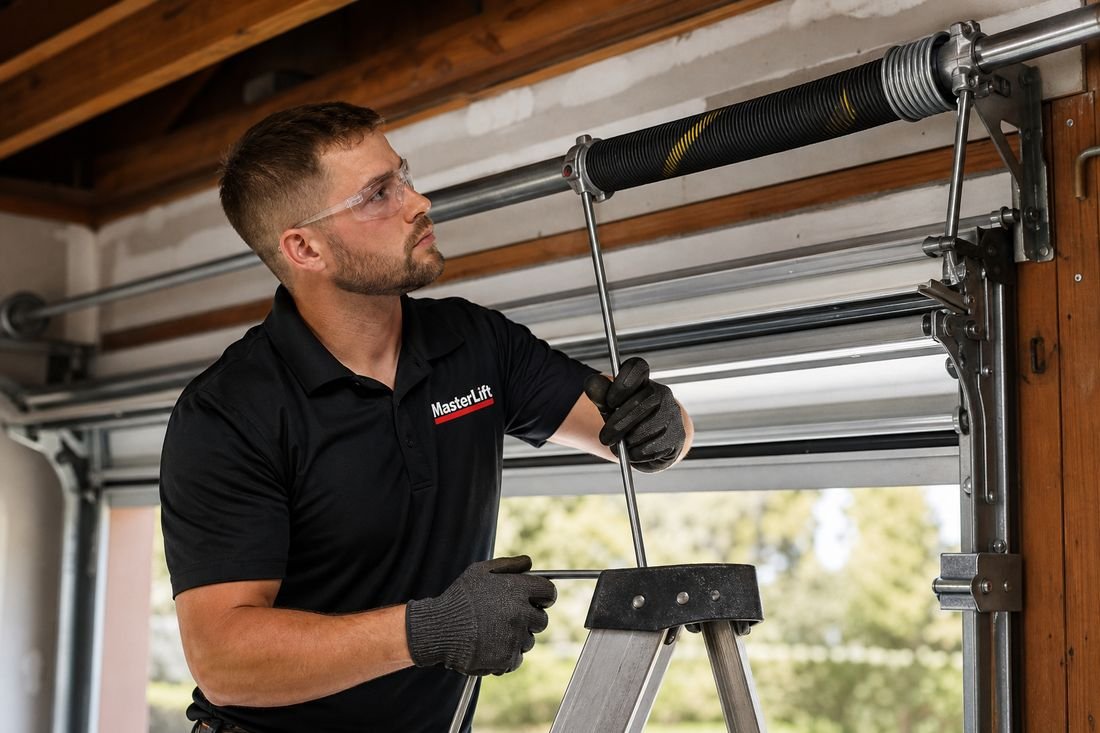
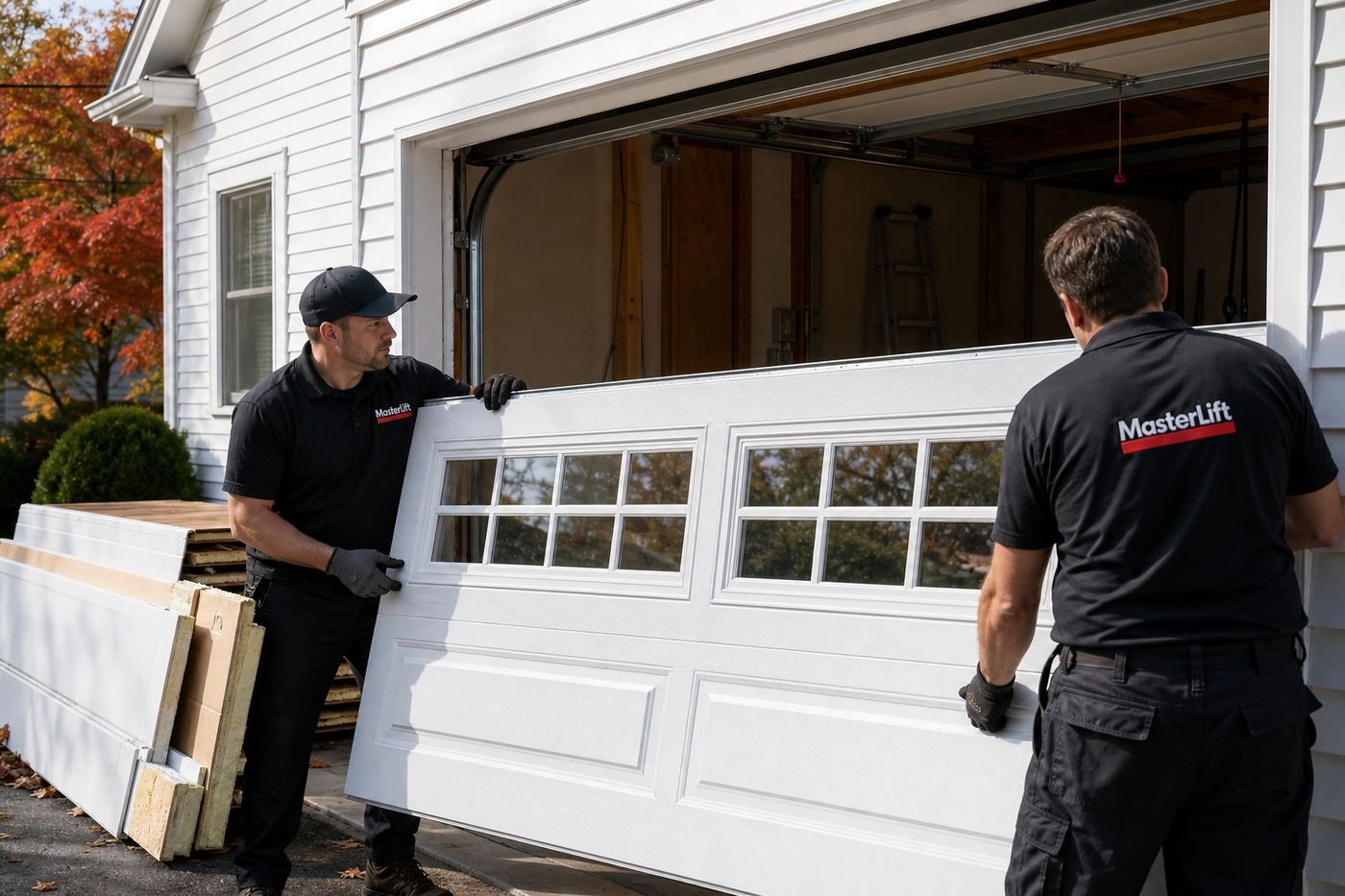
The door gets secured first — clamps or vise grips on the track below the bottom roller so it physically cannot move while anyone has their hands inside the assembly. That step is not optional and it is the difference between a repair and an injury.
Then tension is managed. If the spring system is still loaded, it is controlled before anything is dismantled. Rollers go back into the track section by section, working with the door's weight rather than against it. Bent track is either straightened with the correct tools or replaced; hammering a track back into shape leaves flat spots that the rollers will find again within weeks.
Finally the cause gets fixed. Every roller and hinge on the door gets inspected, cables and drums get checked and re-timed, the track gets re-squared and the lag bolts torqued, and the door gets rebalanced and safety-tested. Putting a door back on the track without doing that last part is how you end up calling somebody again in a month.
Why this is not a DIY job
People do attempt it, usually with a crowbar. Two things go wrong. The first is that the door's weight is unbalanced and unpredictable in this state, and it can shift suddenly. The second is that levering rollers back into a track deforms the track lip, which guarantees a repeat. Add a still-loaded torsion spring to the situation and you have the recipe for the injuries that put people in Hartford Hospital every winter.
A professional off-track recovery runs $149 to $340 depending on damage. A bent track section, a set of rollers and a panel replacement afterwards costs considerably more.
What it will cost
| Job | Typical range | What moves the number |
|---|---|---|
| Off-track recovery, no damage | $149 - $220 | How far it jumped, single or double door |
| Recovery with roller replacement | $210 - $340 | Full set of ten sealed-bearing nylon rollers |
| Recovery with track replacement | $280 - $520 | Vertical or horizontal section, one side or both |
| Recovery with cable and drum work | $340 - $620 | Where a cable failure caused it |
| Recovery with panel damage | $430 - $900+ | Whether the panel model is still produced |
Emergency dispatch runs 24 hours. The after-hours premium is quoted on the phone before we set off.