What each noise actually means
Garage doors are not silent, but they are not supposed to be alarming either. The useful thing about door noise is that it is diagnostic: grinding, squealing, banging, popping and rattling each point at a fairly specific set of causes. Here is how to read yours.
Grinding
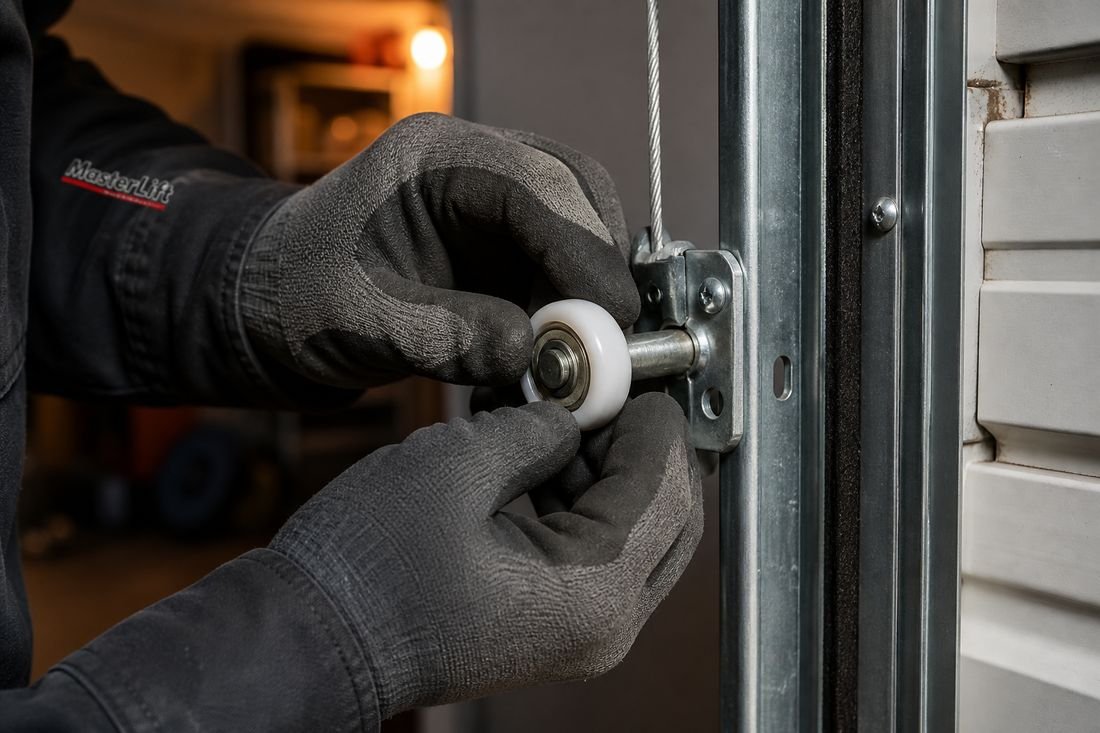
Metal-on-metal grinding usually means bearings. Steel rollers have small ball bearings that dry out and eventually seize, at which point the roller stops rolling and starts dragging along the track. The fix is a set of nylon sealed-bearing rollers, $120 to $230 fitted, and it is the single most transformative thing you can do to a noisy door.
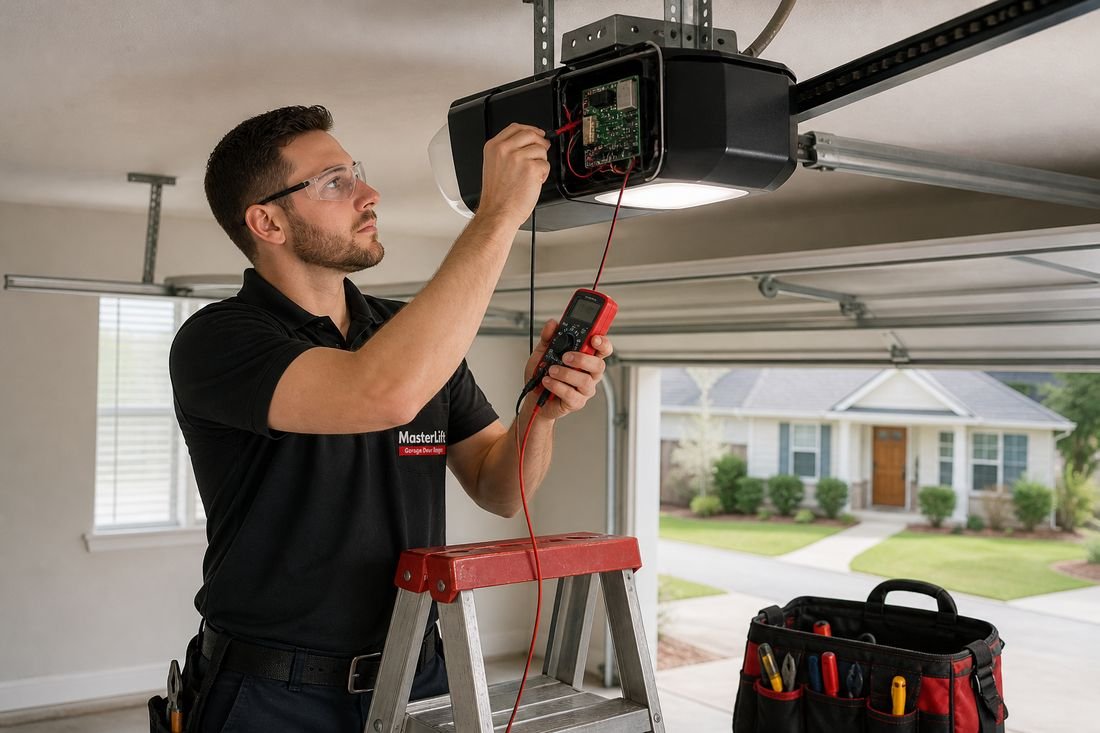
Grinding from the motor head instead is the opener's drive gear, and a chain-drive that grinds while the chain barely moves has stripped it.
Squealing and screeching
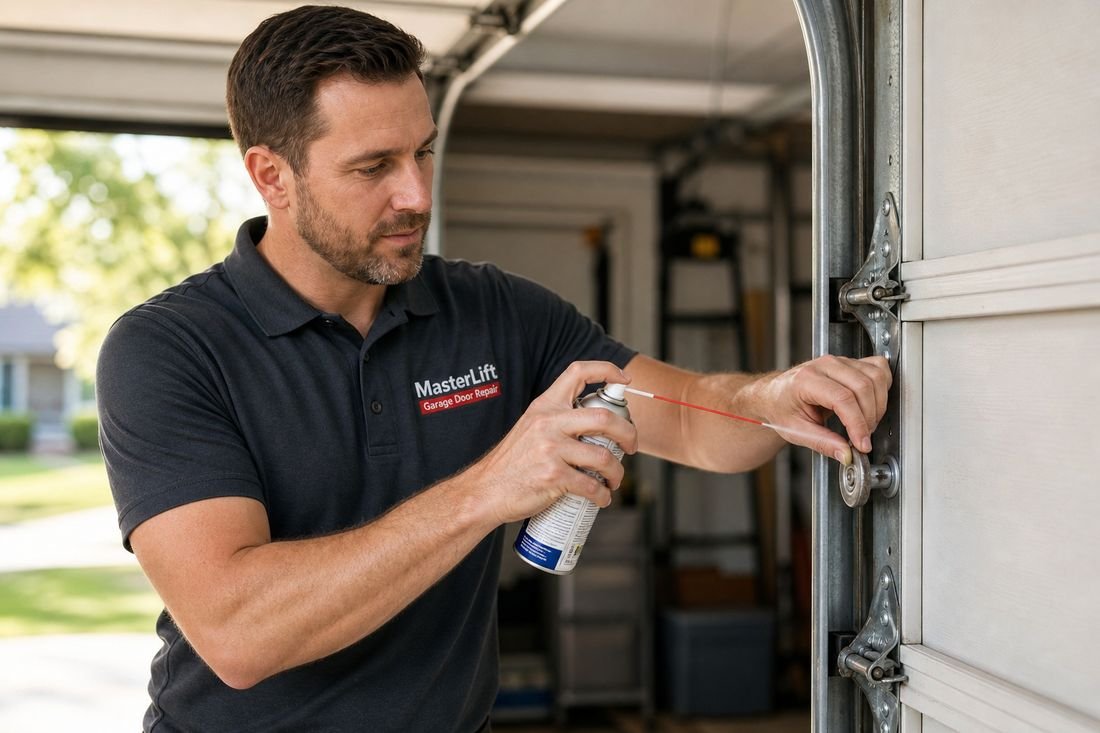
Nearly always lubrication. Hinges, roller stems and the torsion spring coils all need a light lithium or silicone garage door lubricant twice a year, and in this climate the winter application matters more than the summer one. Do not use WD-40 as a lubricant — it is a solvent and it strips what is already there. Do not grease the track either; the rollers roll, they do not slide, and grease in the track just collects grit.
A single loud bang
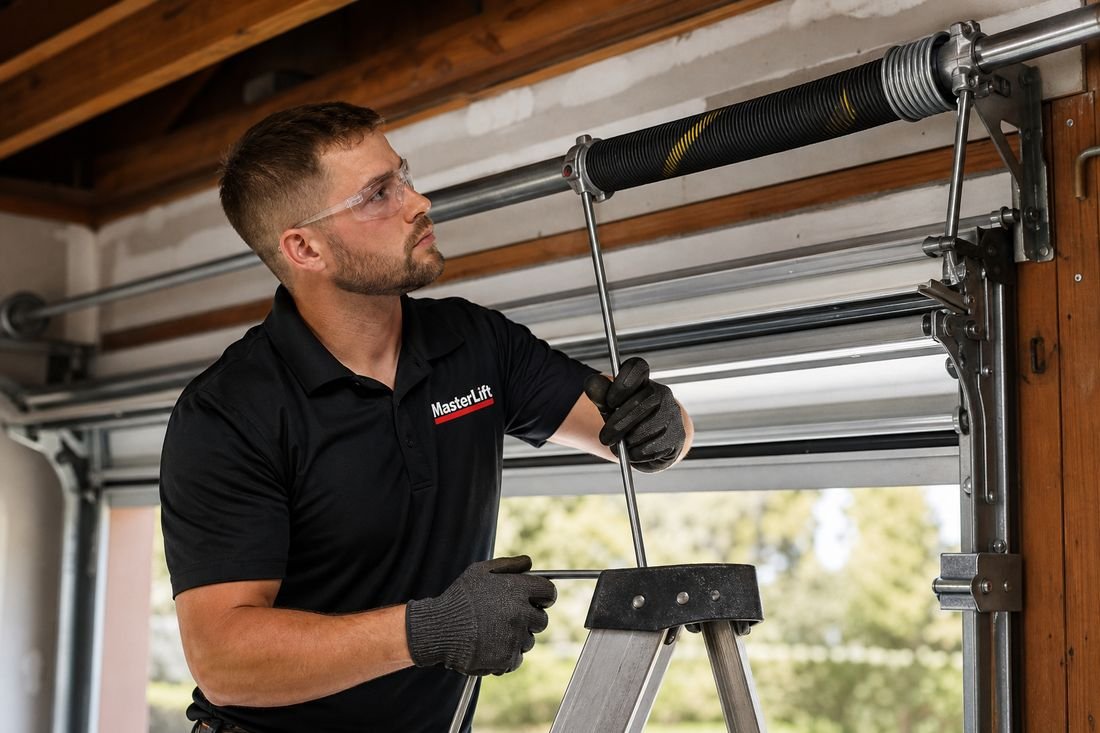
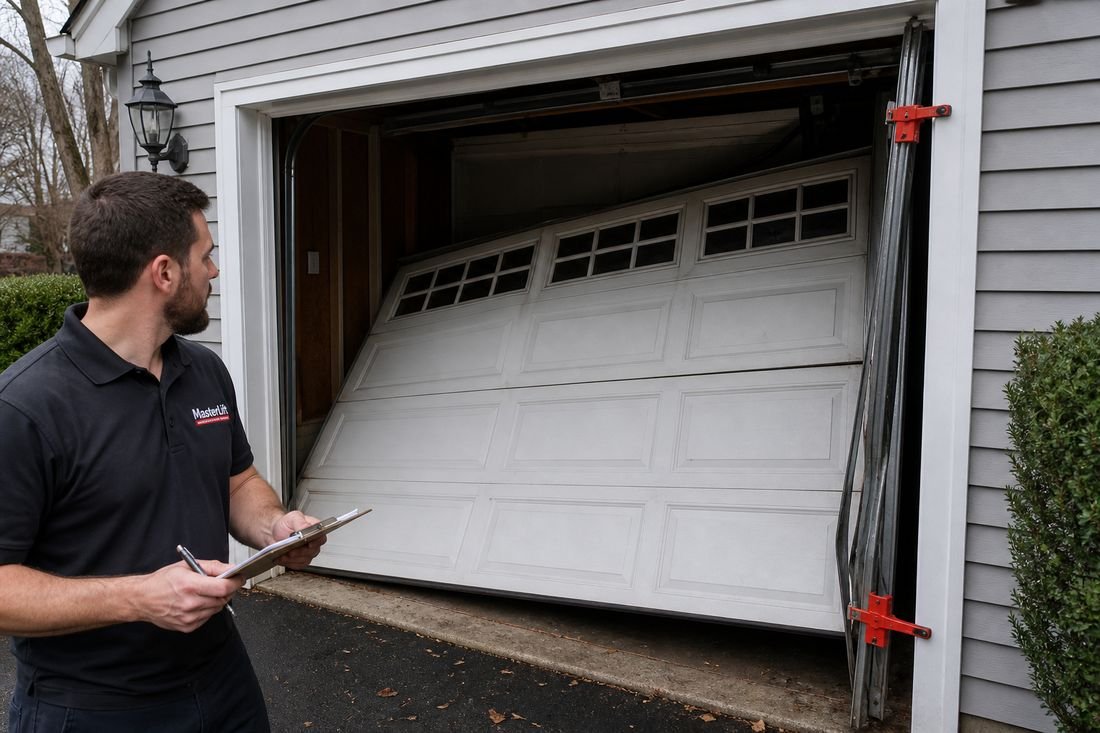
Stop reading and go look at the springs. A single sharp bang, often mistaken for something falling over, is the classic sound of a torsion spring letting go. Look for a two- to three-inch gap in the coil. If you find one, do not run the opener.
Popping or cracking as the door moves
Usually the hinges, and specifically the ones between sections three and four which take the most flex as the door goes round the curve. Worn hinge holes elongate and the pin snaps into position with a pop. It is cheap to fix and it gets worse if ignored, because an elongated hinge lets the section shift and eventually cracks the panel.
Popping can also come from the torsion spring itself as coils bind and release, which means it is dry and wants lubricating.
Rattling and vibration
Loose hardware. Every door has dozens of nuts and lag bolts, and thirty cycles a week works them loose over a few years. A tune-up torques all of them, which typically drops the noise floor of the whole door noticeably. Rattling can also be a bent track section that has opened up the gap between track and roller.
Slapping or slack chain
A chain that slaps against the rail on start and stop is too loose. It is adjustable at the trolley and it should have a small amount of deflection, not a visible sag. Left alone it wears the sprocket.
If the noise is really about the bedroom above the garage
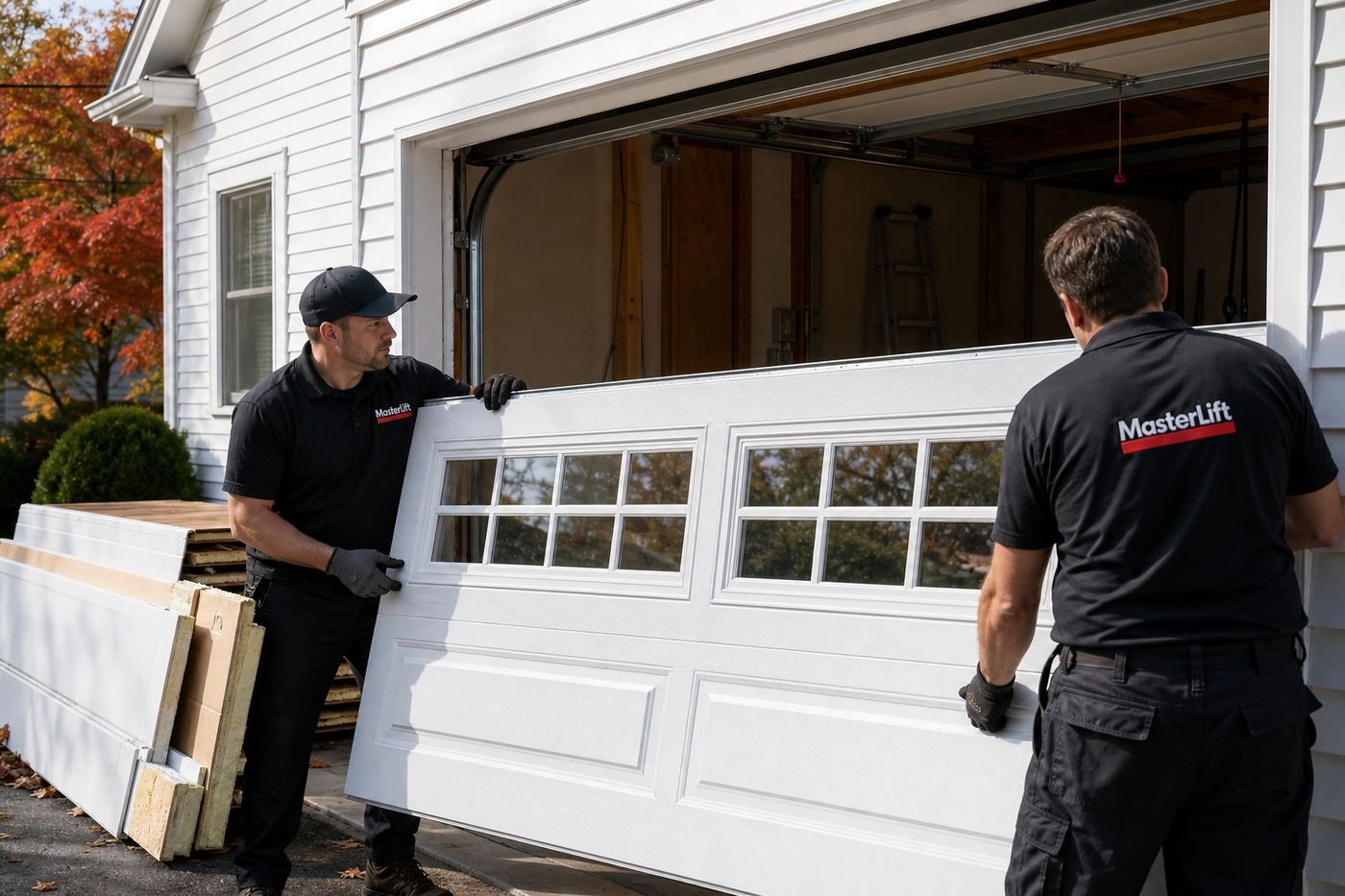
A significant share of the noise calls we get are not about the door itself but about the room over it. Three things fix that, in order of impact. Sealed-bearing nylon rollers, which cut the roller noise almost entirely. A belt-drive opener instead of a chain, which removes the chain slap and the motor whine. And an insulated door, which is substantially more rigid and does not drum.
Doing all three turns a door you can hear from the far end of the house into one you have to be listening for.