Start by discounting the advice, including ours
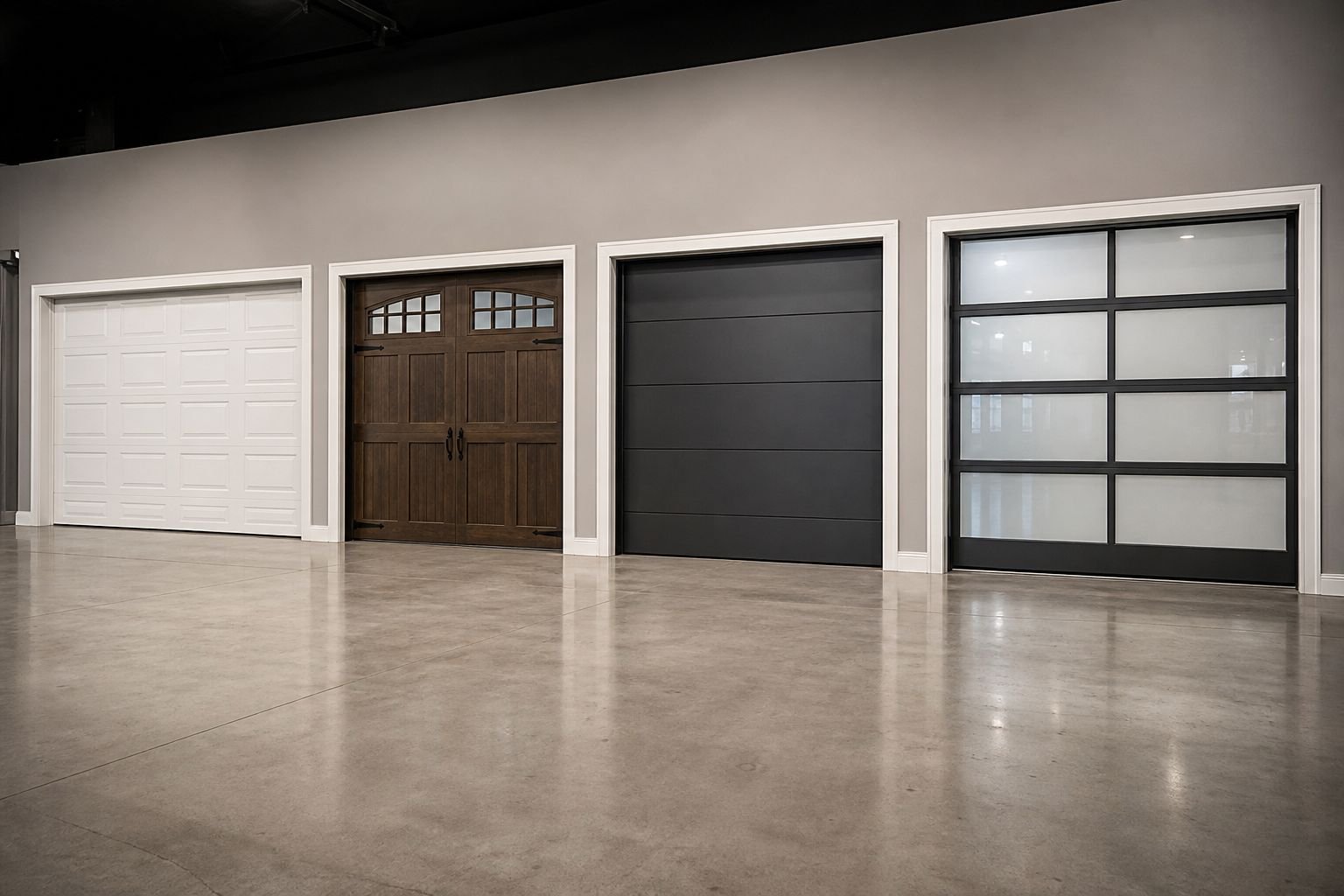
A new installed door starts around $899 and a typical insulated double lands considerably north of that. A spring job is $189 to $420. A cable job is $149. You do not need a degree in incentives to see which conversation a garage door company would rather be having.
So when anyone — us included — tells you the door needs replacing, the right response is to ask which specific component has failed, why it cannot be replaced on its own, and to be shown it. A recommendation that survives those three questions is probably honest. One that retreats into "it's just old" is not.
The four faults that genuinely mean replacement
1. Multiple damaged sections. Panels are replaceable individually, and on a door whose model is still in production it is usually the right call. The arithmetic turns at roughly two sections: at that point you are paying most of a new door for a repair that leaves you with mismatched paint and an old top section.
2. The model is discontinued and no section matches. Manufacturers change profiles. If your door is twenty years old and the section you need has not been made in a decade, there is no repair to do. We will tell you if a close-enough match exists, but "close enough" on a street-facing door is a judgement you get to make, not us.
3. Structural rust at the bottom section. Surface rust is cosmetic and treatable. Rust that has eaten through around the bottom brackets is not, because those brackets are where the lift cables attach. That is the highest-stress point on the entire door. A bottom bracket pulling out of corroded steel under load is genuinely dangerous. This is the one where we will not do a partial fix.
4. A wood door that has gone at the joints. Delamination and rot in a wooden door means the sections are no longer dimensionally stable. You can fill it, and it will move again next season.
The 50 percent rule, and its exception
The conventional line is that if a repair costs more than half of replacement, you replace. It is a reasonable default and we use it, with one adjustment: weight the remaining life of everything you are not fixing.
A $500 repair on a $1,600 door is 31 percent, comfortably a repair. But if that door is eighteen years old with original rollers, original hinges, a bottom seal that has gone hard and an opener from the same era, you are not buying a fixed door. You are buying eighteen months before the next call.
Conversely a $700 repair on a seven-year-old insulated door is 40-something percent and obviously still worth doing, because everything else on that door has a decade left in it.
Age of the door matters more than the percentage.
Faults people think mean replacement and do not
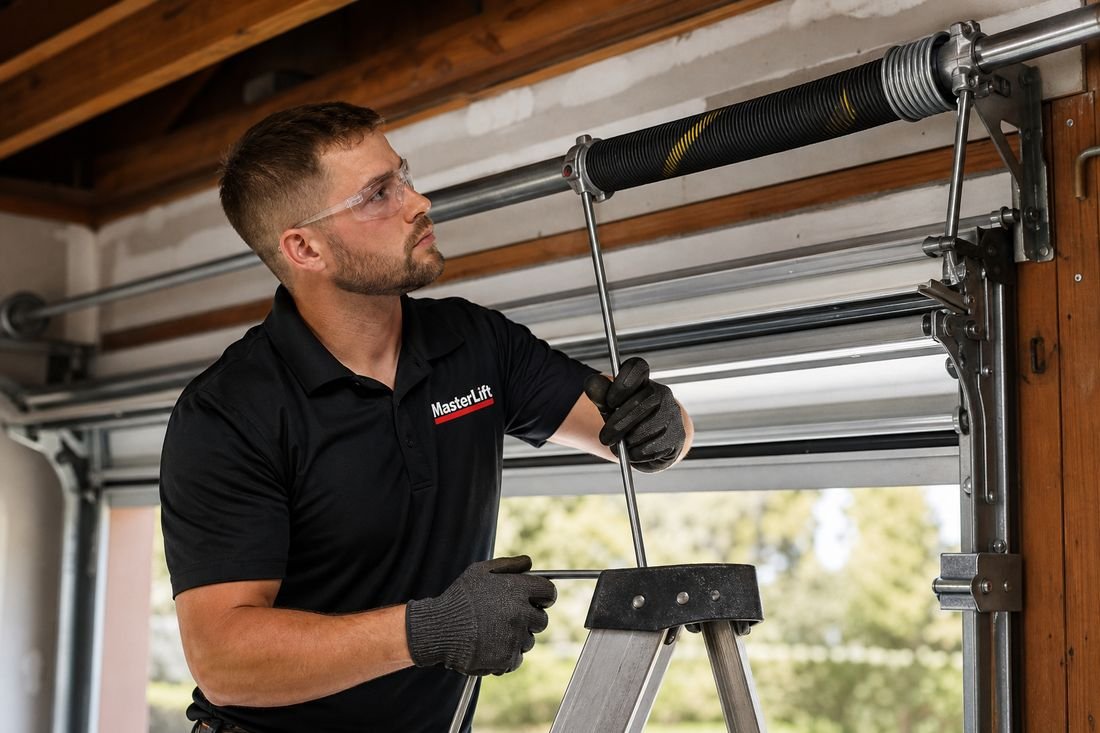
- Door will not open at all. Nearly always a broken spring. That is a $189 to $420 repair on a door of any age.
- Door reverses before it closes. Almost always the photo-eye sensors, out of alignment or with a dirty lens. Often free to fix while we are there.
- Door is loud. Worn rollers, dry bearings, loose hardware. A roller set and a proper service transforms it. Nylon rollers on ball bearings are dramatically quieter than the steel ones fitted as standard on builder-grade doors.
- Door came off the track. Recoverable in the large majority of cases. It only becomes a replacement conversation if the sections got bent while somebody kept pressing the button.
- One side higher than the other. A cable has come off a drum or the drums have lost their timing. A repair, and not an expensive one, provided the door is not forced in that state.
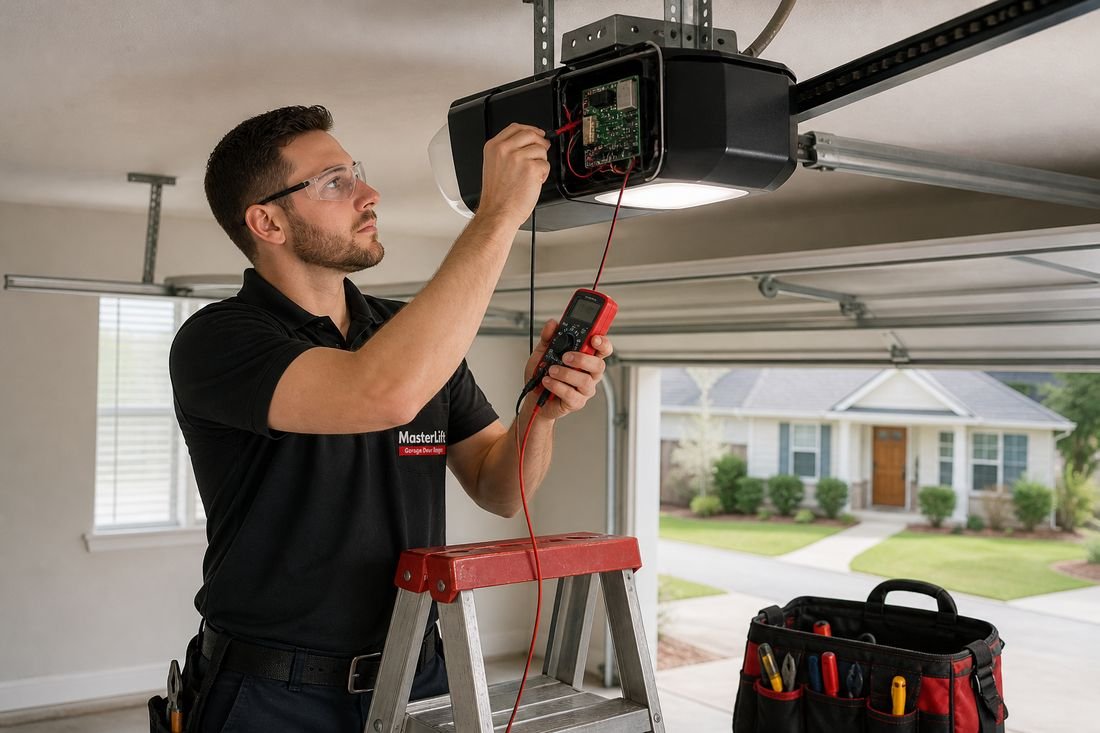
- Opener is dead. That is an opener, not a door. $129 upward to repair, and a new unit is a fraction of a new door.
When replacement is the better buy even though repair is possible
Three situations where we will lay out the case for a new door without claiming the old one cannot be fixed.
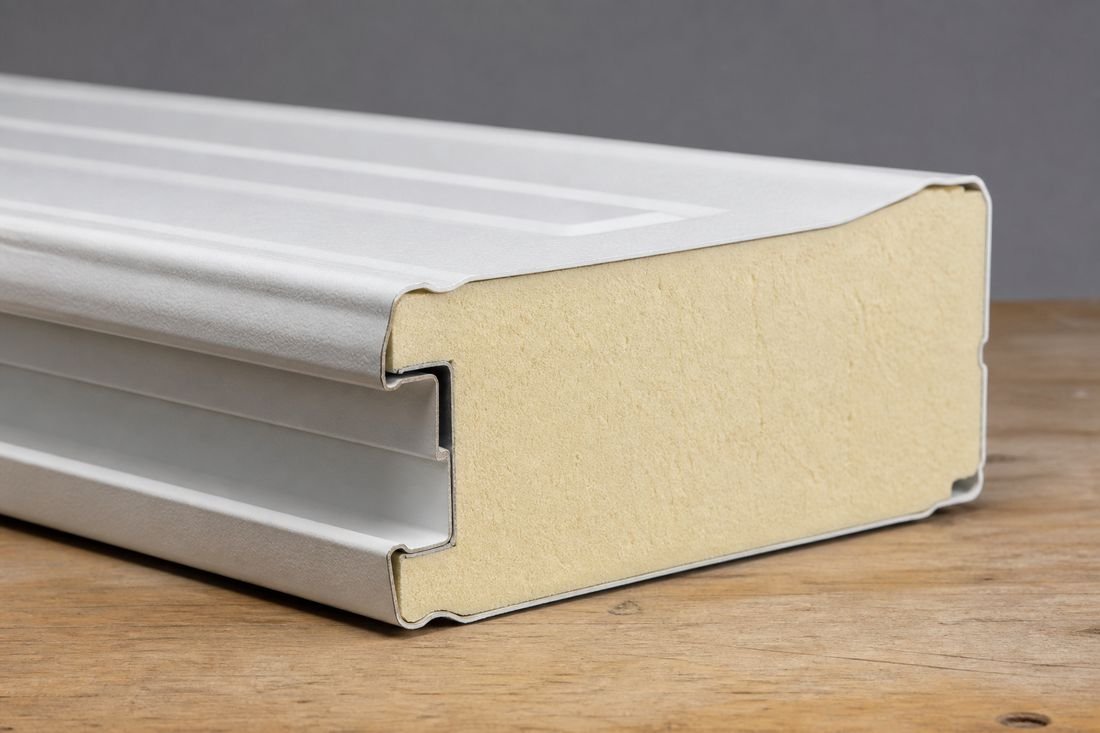
An uninsulated door on an attached, heated garage. If there is living space above or behind the garage, an uninsulated steel door is a hole in your envelope. Connecticut runs somewhere in the region of 5,500 to 6,000 heating degree days a year, which is a long heating season by national standards. Moving from a bare steel door to a polyurethane-cored one is a real and measurable change to how that room above the garage feels in January. It will not pay for itself in energy alone — be sceptical of anyone who claims it will — but combined with comfort and resale it is a defensible spend.
You are selling within a year or two. Garage door replacement consistently reports among the strongest cost-recouped figures in remodelling surveys. Take those numbers with the usual caution about self-reported industry data, but the direction is not controversial: it is a large fraction of the front elevation and it is the cheapest way to change how the house reads from the street.
The door has no safety cables and takes extension springs, and you have children. We would fit the cables first, which is cheap. But if the door is old enough to lack them it is often old enough that replacement is on the horizon anyway.
What to ask before agreeing to a replacement
- Which specific part has failed, and can I see it?
- Is that part available separately? If not, why not?
- What is the repair price and what is the replacement price, both in writing?
- If I repair it, what would you expect to fail next and roughly when?
- Is there a safety reason this cannot be repaired?
Any competent technician can answer all five without hesitating. If the answers get vague, get a second opinion — and get it from a company that did not just quote you for a door.