The short answer, and then the honest one
For a straight replacement of a residential garage door in a Connecticut town, the usual answer is yes, a building permit is required, and the contractor pulls it. For replacing only the opener on a door that stays put, the usual answer is no.
That is the ninety-percent version. The reason it is not the whole answer is that Connecticut has no county government. The state was one of the first to abolish it, in 1960, and what replaced it is 169 towns and cities each running their own building department under the state building code. The code is uniform. The interpretation, the fee schedule, the turnaround and the paperwork are not.
So Newington and Wethersfield sit four miles apart and quote different fees for the same job. Neither is wrong. They are separate authorities having jurisdiction, and the code gives them room to read the same paragraph slightly differently.
What is actually being permitted
People assume the permit is about the door. It is not, particularly. The door is a manufactured assembly that already carries its own listings. What the building official is looking at is the opening — the header above it, the jambs either side, the anchorage that holds several hundred pounds of steel and a spring under enormous tension to the structure of your house.
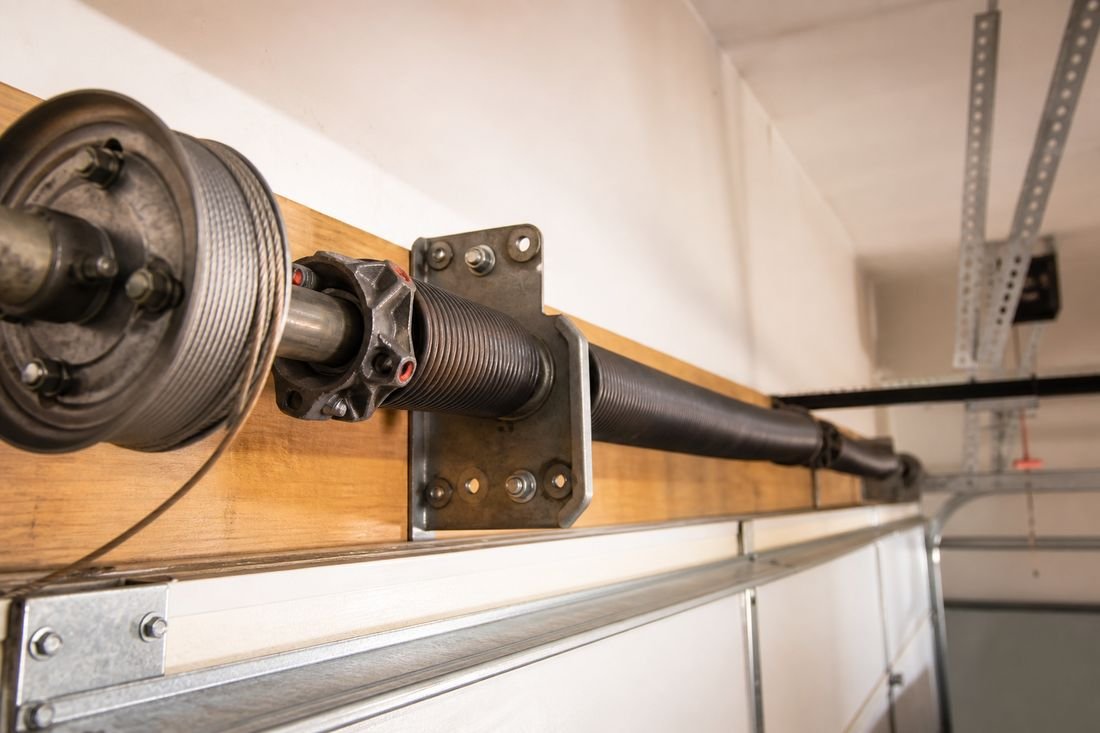
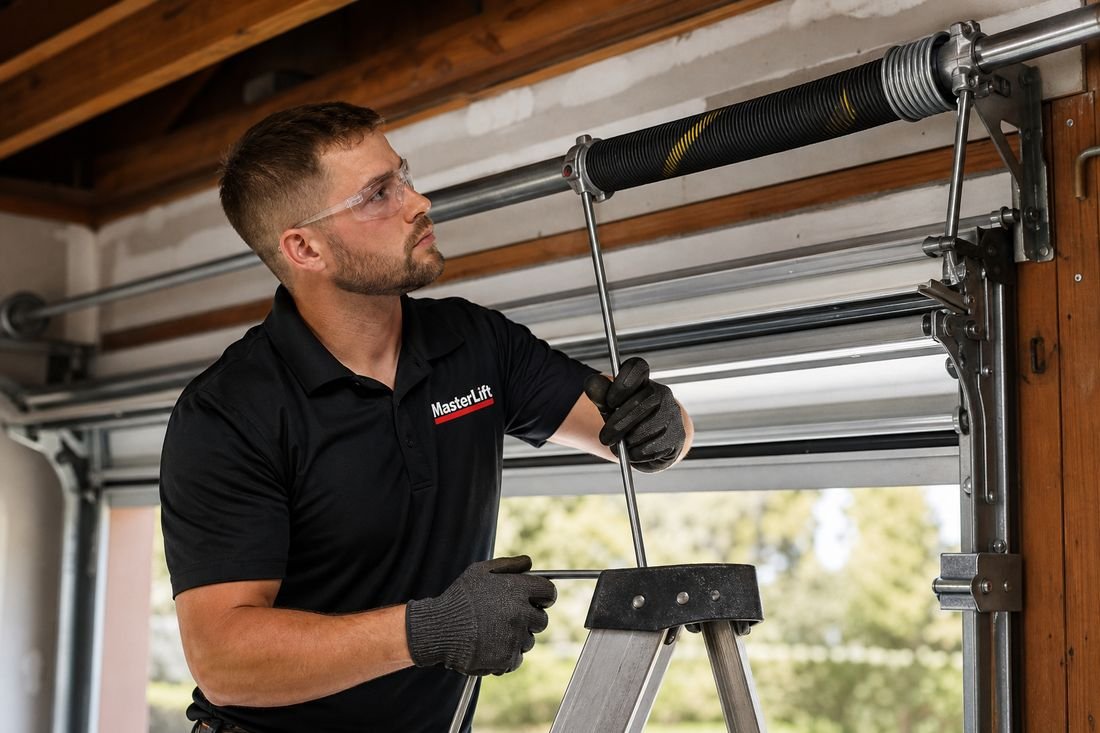
A double-wide door on a torsion system stores a genuinely dangerous amount of energy. The spring anchor bracket in the middle of the header is carrying all of it. If that header was cut for a wider opening at some point by a previous owner, or if the anchorage is going into something that was never designed to take it, the building official wants to have seen it. That is the whole point of the inspection.
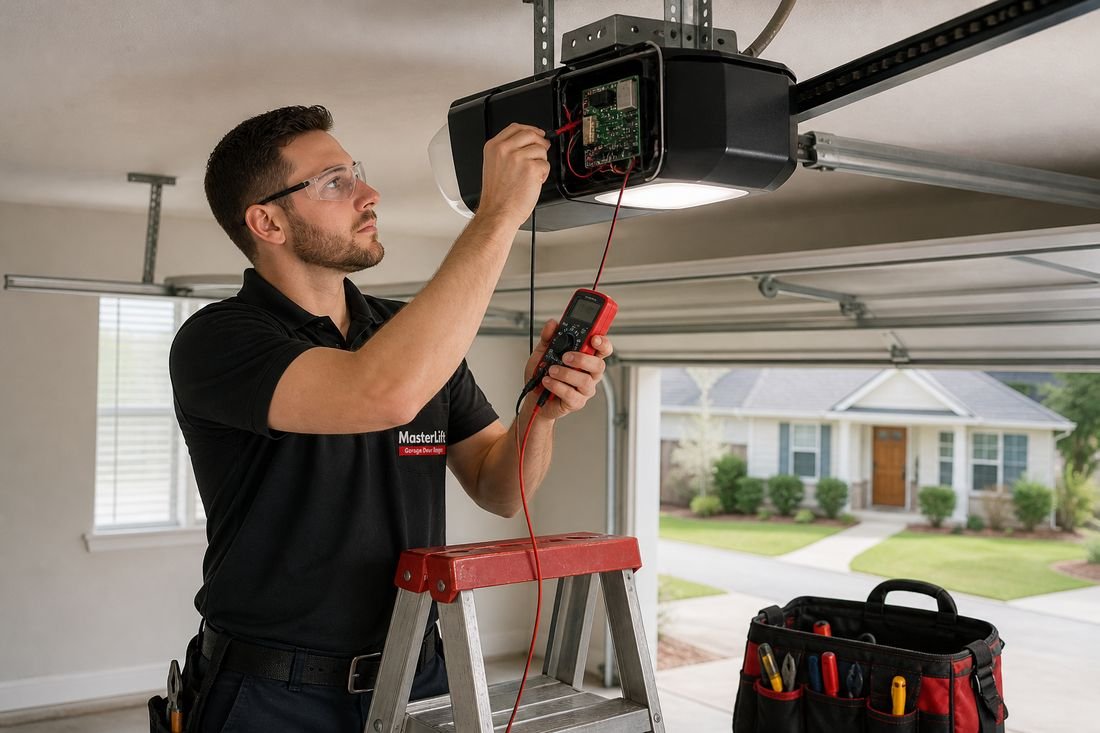
Which is why the exemptions run the way they do. Replacing an opener does not touch the structure. Replacing springs does not touch the structure. Replacing a single damaged panel in an existing door does not touch the structure. Taking the whole assembly out and putting a different one in does.
Where it gets genuinely different town to town
Four things vary and it is worth knowing which one you are dealing with before you ring anybody.
Fee structure. Some towns charge a flat minimum for a residential alteration permit. Others calculate from declared job value, typically somewhere in the region of fifteen to twenty dollars per thousand, with a floor. On a $1,400 door the difference between those two methods is small. On a pair of insulated carriage-house doors with new openers it is not.
Turnaround. Over-the-counter same-day issue is common for a simple like-for-like swap in the smaller towns. The larger departments run a queue. Hartford and New Britain are busier authorities than Avon or Canton and it shows in the wait.
Whether a same-size swap counts as a repair. This is the one that catches people. A few departments will treat an identical-size replacement into an unaltered opening as maintenance rather than alteration. Most will not. Do not assume; the department will tell you in about ninety seconds on the phone.
Historic district review. This is separate from the building permit and it is the one that adds weeks rather than days. If your property sits inside a local historic district, an exterior alteration visible from a public way may need a certificate of appropriateness from the district commission before the building department will act. West Hartford, Farmington, Wethersfield, Suffield and Windsor all have districts. A garage door facing the street inside one of them is exactly the kind of change a commission exists to review.
Who pulls it
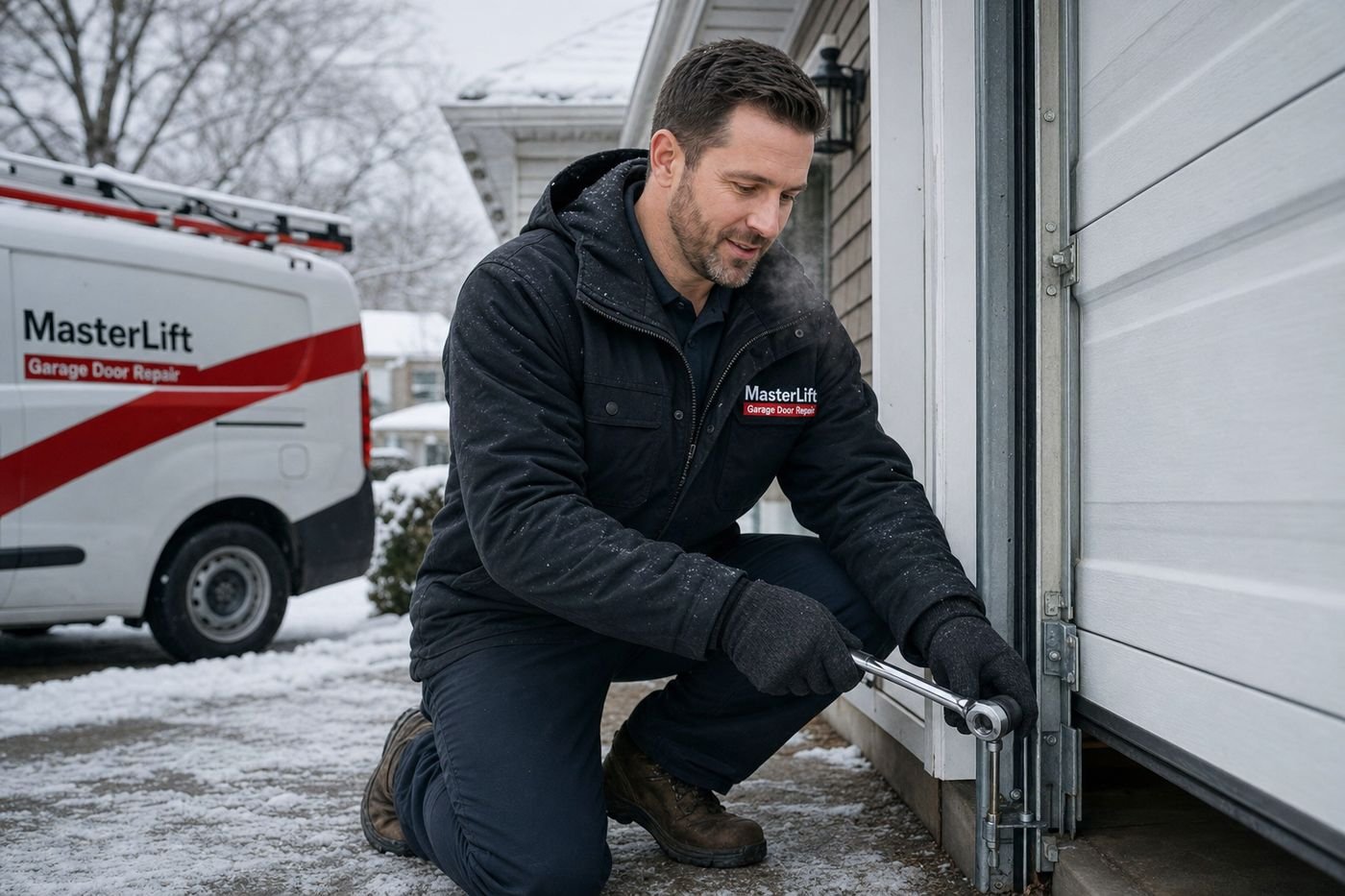
The contractor should, and if a contractor asks you to pull the permit yourself as the homeowner, treat that as information about the contractor.
Homeowner permits exist and are legitimate for genuine owner-performed work. Used the other way — a registered contractor doing the work under a permit issued to the homeowner — they move the liability onto you and, more to the point, they are often a sign the contractor's Home Improvement Contractor registration is not current. Connecticut requires that registration through the Department of Consumer Protection for residential work of this kind, and it is checkable in a couple of minutes online.
We pull the permit, we schedule the inspection, we meet the inspector. It is included in the quoted price and it is not a line item you have to think about.
What happens if you skip it
Nothing, usually, for years. And then you sell the house.
Unpermitted work turns up at closing. The buyer's attorney orders a municipal search, the search shows an alteration with no matching permit, and now you are retro-permitting under time pressure with a closing date in the diary. Retroactive permits generally cost more, and the inspector is looking at finished work he cannot see the back of, which sometimes means opening something up.
The insurance angle is less clear-cut than people claim online. A carrier declining a claim purely because a garage door permit was missing is not something we have actually seen. The closing problem, we have seen repeatedly.
Rough guide by town
Treat this as a starting point rather than gospel — fee schedules get revised and the only authoritative source is the department itself. Every one of these towns publishes a building department phone number and most publish the schedule as a PDF.
- Door replacement, same opening. Permit expected in nearly every town in our area. Typically issued quickly, often the same day for a like-for-like swap.
- Door replacement with a resized opening. Permit definitely required, and the header work will be inspected before the door goes on. Budget for a second visit.
- Opener replacement only. Generally exempt. A handful of departments want to know if new circuit wiring is involved, which is an electrical question rather than a door one.
- Spring, cable, roller, hinge or track repair. Exempt. This is maintenance and nobody wants a permit application for it.
- Single panel replacement. Exempt in practice.
- New opening cut into a wall. Full permit, structural review, and probably a drawing. Different conversation entirely.
The one call worth making
If you want certainty in under five minutes: ring your town building department, say "I am replacing an existing garage door in the same opening, no structural change, do you need a permit and what is the fee," and write down the answer with the date and the name of whoever told you. That is the authoritative answer for your address and it costs you a phone call.
Or let us handle it. We work in these departments constantly and we know which ones issue over the counter and which ones want the application in by Tuesday for a Thursday release.