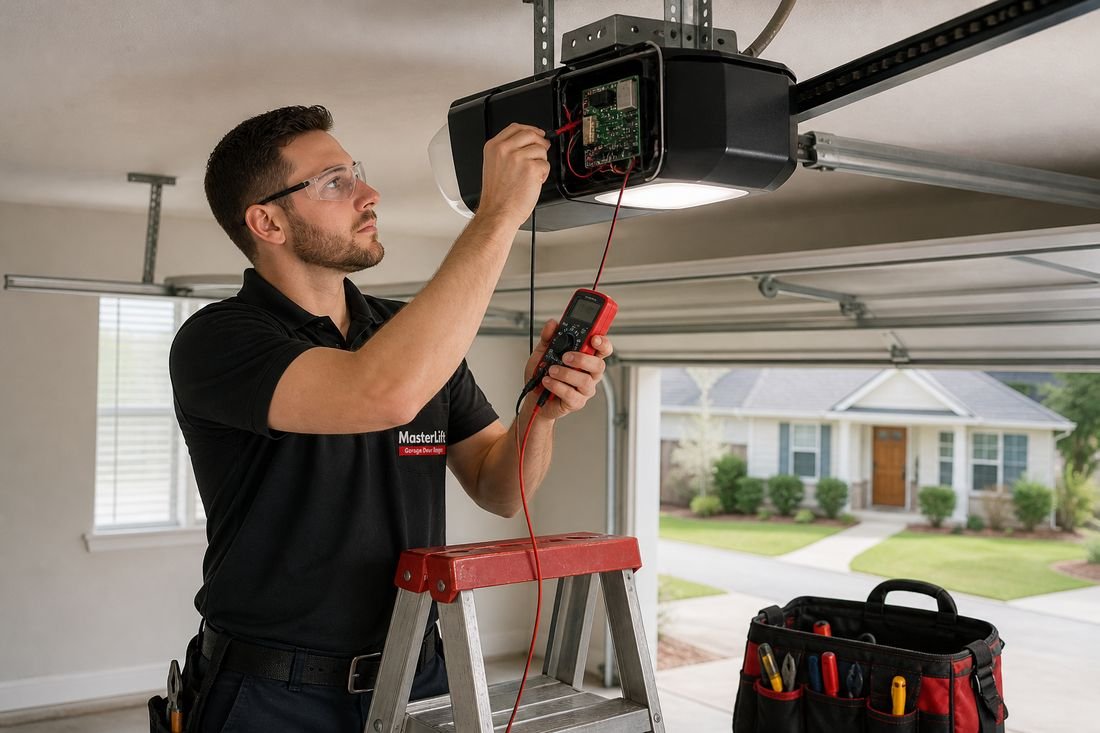
What the hum tells you
A hum is good diagnostic information. It means the outlet is live, the logic board is working, the safety circuit is satisfied and the motor is energised. Everything electrical upstream of the motor is fine.
What it cannot do is convert that into movement. So the fault is between the motor and the door, and there are only four realistic places it can be.
Rule out the free one first: the trolley is disengaged
Ten seconds, no tools. Look at the rail above your head and find the trolley — the carriage that the door arm bolts to. The red release cord hangs from it.
If somebody pulled that cord during a power cut, or a child swung on it, the trolley is disconnected from the chain or belt. The motor runs, the chain moves, and the trolley sits there doing nothing. The hum you are hearing may even be accompanied by the chain visibly travelling.
To re-engage: close the door fully, then either pull the release cord toward the door opening, or simply run the opener — on most units the trolley clicks back into the chain carriage as it passes. If the chain moves and the door does not, this is almost certainly your fault and it costs nothing.
Cause two: a broken spring (and this is the most common)
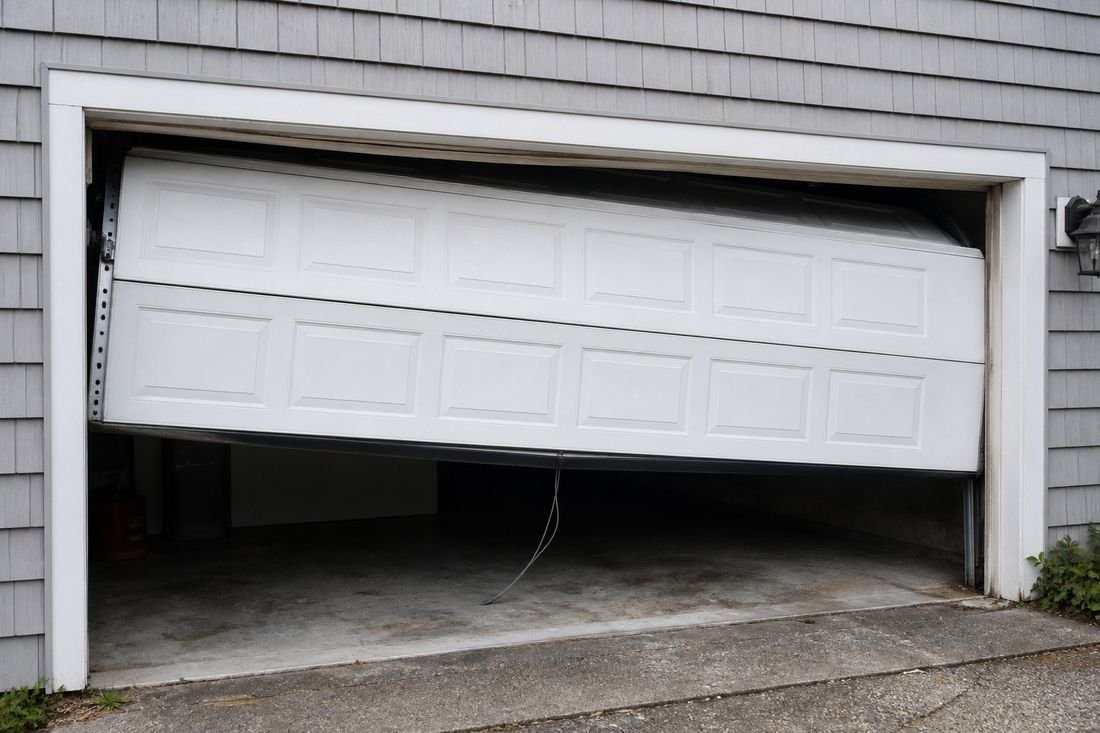
If the trolley is engaged and the motor is humming under obvious strain, go and look at the springs.
The opener is not designed to lift the door. The springs do that. A half-horsepower opener produces nowhere near enough force to raise 200 pounds of steel unassisted, so when a spring breaks the motor tries, fails, and either hums against a load it cannot shift or trips out on its force limit.
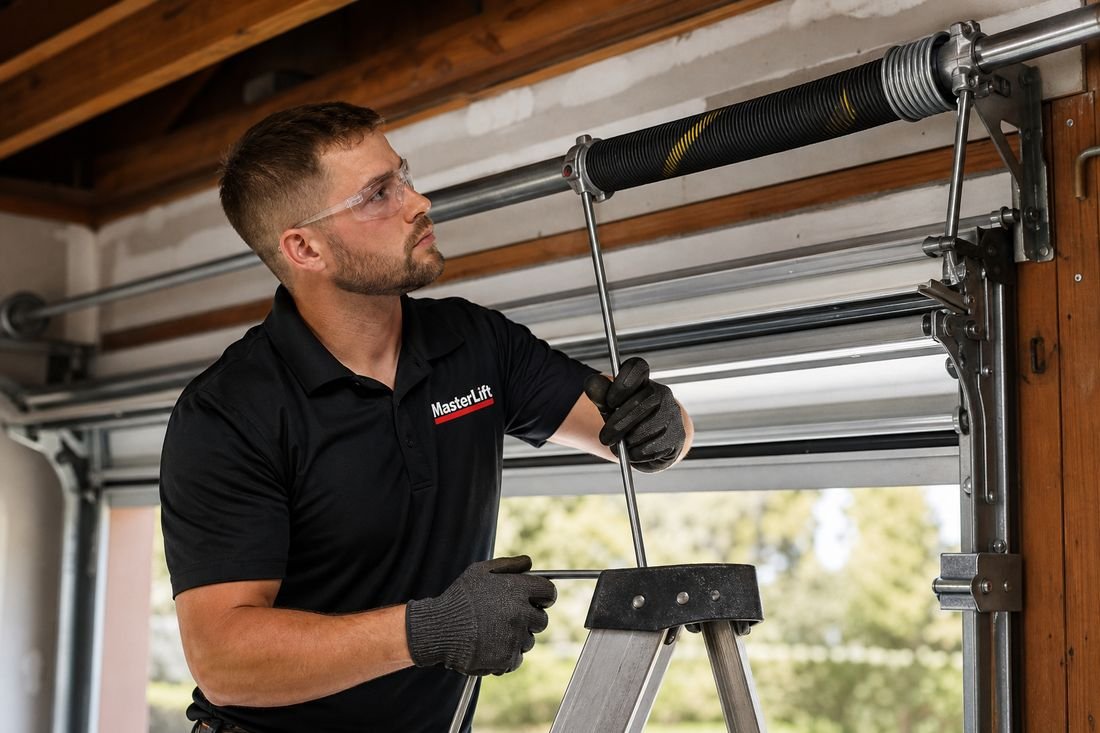
Look above the door for a torsion shaft. A broken torsion spring shows a clean two-inch gap in the coil — it is unmistakable once you know to look. For extension springs, look along the horizontal tracks for a spring that is visibly separated or hanging loose.
Stop using the opener. Every attempt puts the full load through the gearbox, and the way an inexpensive spring job turns into an expensive one is somebody pressing the button eight more times to see if it will catch. Pull the release cord and leave the door alone.
And do not try to lift a door with a broken spring by hand beyond checking. It is the full weight, unassisted, and it will come down.
Cause three: a stripped drive gear
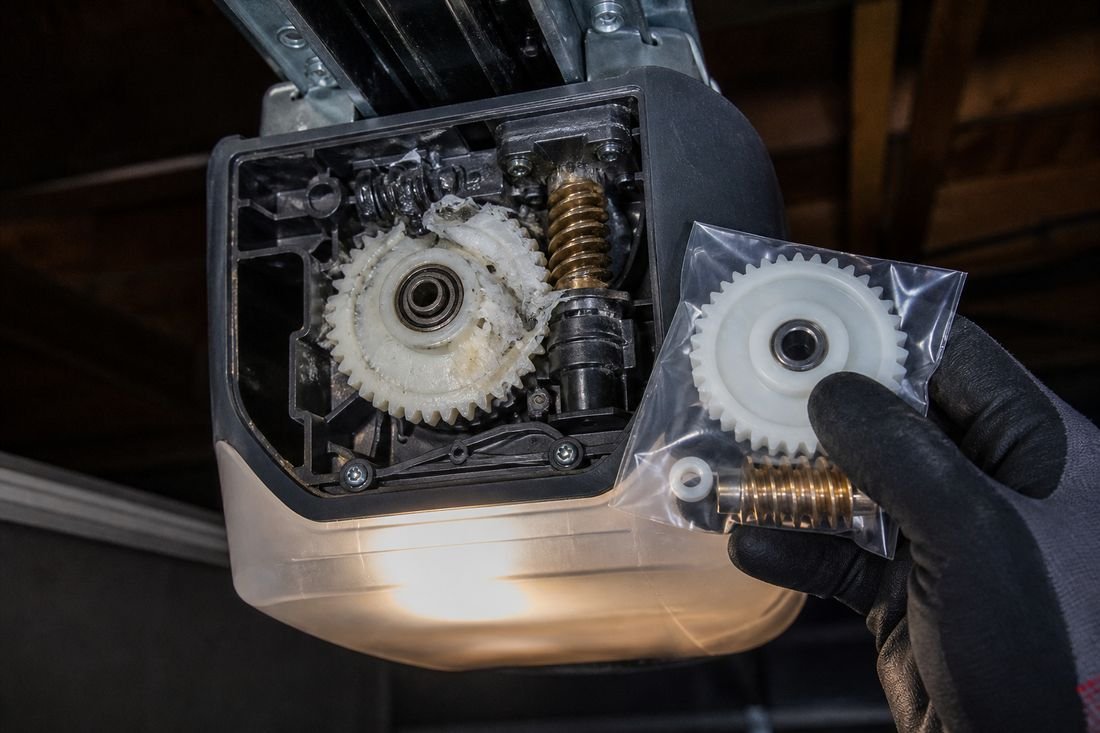
Very common on chain-drive openers past about ten years, and particularly on the Chamberlain and LiftMaster platform, where the main drive gear is a nylon component meshing with a steel worm gear on the motor shaft.
Nylon against steel is a deliberate design choice — the gear is the sacrificial part, cheaper to replace than a motor. It wears, and when the teeth finally strip the motor spins freely while nothing downstream turns.
How to confirm: the hum sounds unloaded rather than straining, and the chain or belt does not move at all. If you take the light cover off, you will often find a fine white or grey nylon powder inside the housing. That dust is the diagnosis.
A gear and sprocket kit is an inexpensive part and a routine repair, typically well under the cost of a new opener. Worth doing on a unit under about fifteen years old. On an older opener with no rolling-code security and no soft-start, replacement is often the better spend.
Cause four: the capacitor
The start capacitor gives the motor the initial kick it needs to begin rotating. When it fails, the motor is energised but cannot start turning, which produces a characteristic low continuous hum and, after a while, a hot smell.
How to tell it apart from a gear: a stripped gear lets the motor spin freely and sound unloaded. A failed capacitor means the motor does not turn at all — the hum has a dead, stalled quality to it. Sometimes a stalled motor will start if you give the chain a nudge, which effectively confirms it.
Unplug the unit if you suspect this. A stalled motor draws heavily and gets hot.
This is the one on the list not to attempt yourself. Capacitors store charge after the power is disconnected and can discharge through you. They need bleeding off safely before anything is touched.
A quick decision tree
- Chain moves, door does not → trolley disengaged. Free fix.
- Motor strains, chain barely moves or not at all, gap visible in the spring → broken spring. Stop using the opener.
- Motor spins freely, chain does not move, nylon dust in the housing → stripped drive gear.
- Motor does not turn at all, dead hum, hot smell → capacitor. Unplug it.
In every case except the first, the door itself can still be operated manually. Pull the release cord, lift it by hand, and you are not trapped while you sort out the repair — unless the spring is the broken part, in which case leave it closed and call somebody.