The pattern is real and it is predictable
Every year, the first night that drops below about fifteen degrees, the phone starts at around six the next morning and does not stop. People assume it is coincidence, or that cold weather is a convenient excuse. It is neither. Four distinct mechanisms are at work and they all sharpen in the same conditions.
One: spring steel gets brittle, and springs are already living on borrowed time
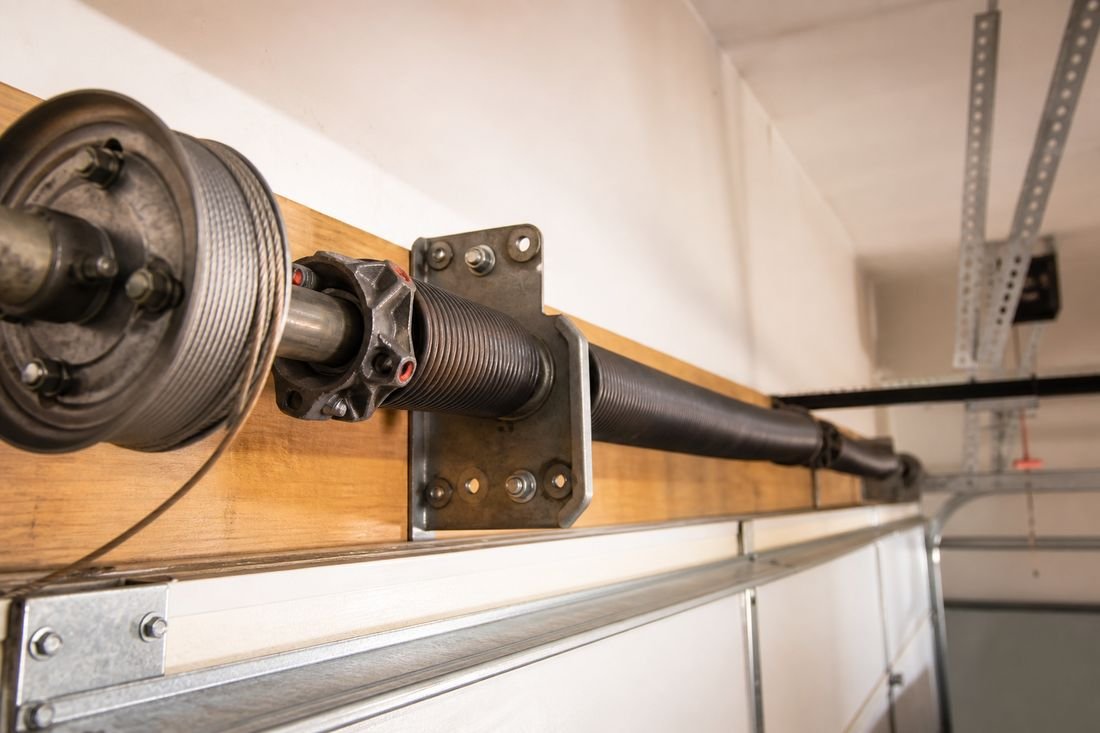
A torsion spring is a consumable. It has a cycle rating — a standard spring is typically rated for around 10,000 cycles, where one cycle is one up and one down. A household that opens the door four times a day gets through roughly 1,460 cycles a year, so a standard spring is at the end of its design life somewhere around year six or seven.
Cold does not use up cycles. What it does is reduce the steel's toughness. The same micro-crack that a spring has been carrying quietly through the autumn propagates faster at twelve degrees than it does at fifty. So a spring that was going to fail in February anyway fails on the coldest morning instead, and it fails with a bang that people genuinely mistake for a gunshot.
This is why we say the cold does not break good springs. It finishes off tired ones. If your springs are seven years old and original, the cold snap is not the problem, it is the deadline.
Two: the grease you put on last spring turns to toffee
This one is self-inflicted and extremely common. Somebody sprays a general-purpose lubricant on the tracks in warm weather, it works beautifully, and then the temperature drops and the same product stiffens into something with the consistency of cold honey. Rollers stop rolling and start dragging. The opener sees the extra load and either strains or trips out on its force limit.
Two rules here and they matter. First, never lubricate the tracks. The track is a guide, not a bearing surface; the roller is supposed to roll along it, and putting grease in there collects grit and makes an abrasive paste. Wipe tracks clean and leave them dry. Second, use a lithium-based or silicone garage door lubricant on the moving parts only — hinge pivots, roller stems and bearings, the spring coils, the end bearing plates. Not WD-40, which is a solvent and a water displacer and will strip out the lubricant that is already there.
Three: everything contracts, and the door is a big piece of steel
A sixteen-foot steel door contracts measurably across its width when the temperature falls forty degrees. Not dramatically — but the tolerances at the bottom seal and along the side weatherstrip are small, and metal that fit correctly in October binds slightly in January.
Add the part everyone forgets: the concrete floor also moves, and any water that ran under the bottom seal freezes and bonds the seal to the slab. Now the opener is not lifting a door, it is trying to peel a frozen rubber gasket off concrete. On a modern opener the force limit trips and the door stops, which is the safety system working properly. On an older unit with the force turned up, something gives — usually the bottom section, sometimes the seal, occasionally the opener's gear.
If the door will not break free, do not hold the button down. Get a kettle of warm — not boiling — water along the base, or work a plastic scraper under the seal. Then clear the ice out of the track at floor level so it does not refreeze tonight.
Four: the opener is being asked to do more than it was set up for
Openers have adjustable force limits, up and down, and they are set at install time against whatever the door weighed and how freely it moved that day. Every one of the three problems above increases the force the opener needs. If the unit was already set near its ceiling, a cold morning pushes it over.
The temptation is to turn the force up. Resist it. Those limits are the mechanism that stops the door closing on a child, and they are also the only thing telling you the door has developed a mechanical problem. An opener that trips out in the cold is reporting a fault, not causing one.
The correct test takes ninety seconds. Pull the release cord with the door closed and lift the door by hand. It should take moderate effort and it should stay put roughly halfway up. If it slams down or shoots up, the spring balance is wrong, and no opener adjustment fixes that.
The pre-winter checklist that actually prevents callouts
- Balance test first. Release the opener, lift by hand, let go at waist height. It should hold. If it does not, the springs need attention before anything else on this list matters.
- Look at the springs in daylight. A gap in the coil means it is already broken. Rust, or coils that look stretched apart compared to their neighbours, means it is going.
- Wipe the tracks dry. A rag and a bit of degreaser. Nothing else goes in there.
- Lubricate the moving parts. Hinges, rollers, bearings, spring coils. Lithium or silicone, sparingly, then run the door a few times to work it in.
- Check the bottom seal. If it is cracked or flattened it will let water under and freeze. It is a cheap part and a five-minute job.
- Sweep the floor along the door line. Grit under the seal is how seals get cut.
- Test the safety reverse. Lay a two-by-four flat on the floor under the door and close it. It must hit the wood and reverse. A rolled-up towel is not a valid test, and neither is waving your hand at the photo-eyes.
- Tighten what has worked loose. A season of vibration backs off hinge and bracket bolts. Snug, not gorilla-tight.
What we would fix now rather than in January
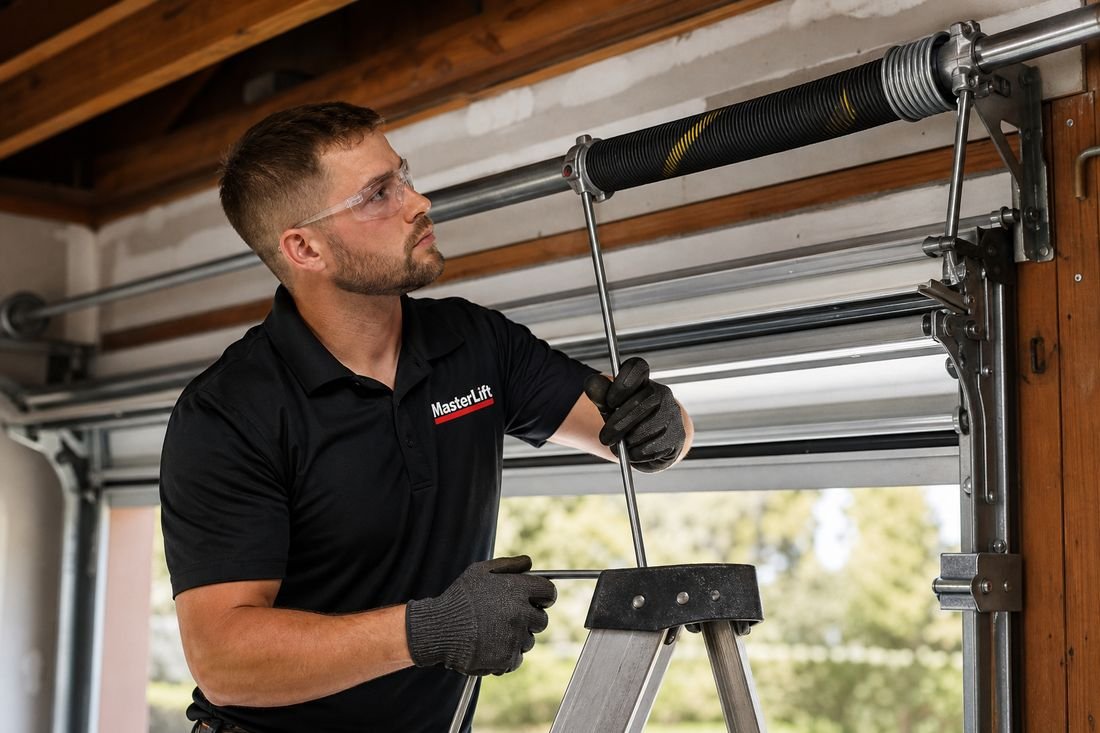
If the springs are past six years old and the door is used daily, replacing them before the cold is straightforwardly cheaper than replacing them at seven on a Sunday morning in a snowstorm. High-cycle springs — typically rated around 25,000 cycles — cost roughly thirty percent more than standard and last two to three times as long. On a door that gets used four or more times a day that is not a premium, it is arithmetic.
The other one worth doing pre-emptively is the bottom seal and, if the garage is attached and heated, the perimeter weatherstrip. It is a small job that stops the ice problem at source.